
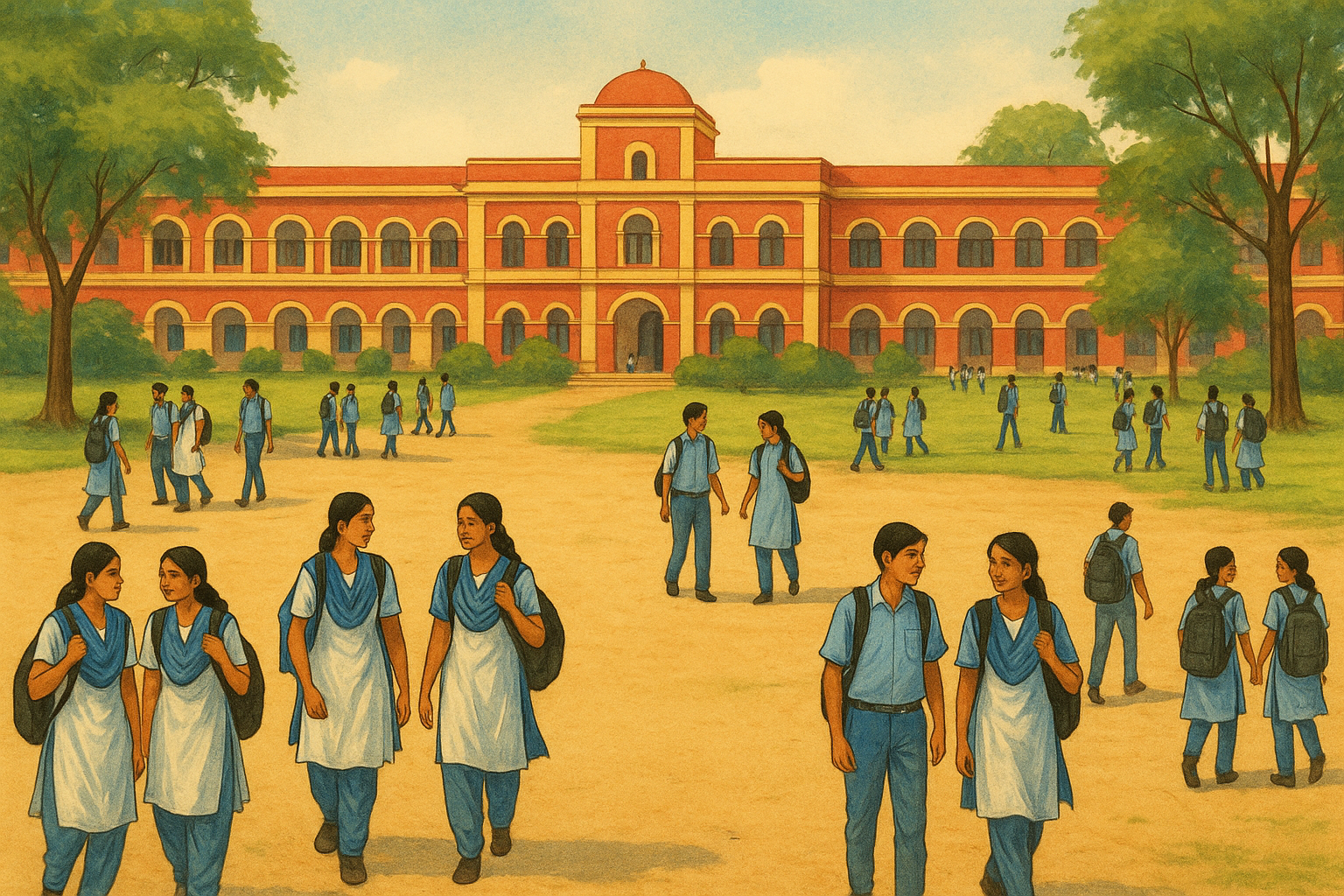
The Blind Spots of Modern Education and How to Fix Them
Rediscovering Wisdom in a Fragmented World
In the rush toward technological advancement and economic growth, we’ve created a world of incredible capabilities but questionable wisdom. Our educational systems, once meant to nurture complete human beings, have become factories producing specialized workers, with little regard for the deeper meaning that makes life worth living. The consequences of this transformation are evident everywhere – from rising mental health issues to environmental degradation, from technological threats to societal division. Yet, we continue to see various problems which are interconnected as separate unrelated issues. If this is not a failure of the modern education system then what is?
The Crisis of Modern Knowledge
What we’re facing today isn’t simply an educational challenge but a fundamental crisis in how we define knowledge itself. We’ve reduced knowledge to mere information—facts and figures that produce no transformation in the individual. We’ve shattered the unified field of human understanding into incompatible silos that not only operate in isolation but actively oppose each other with an almost morbid hatred. In this fragmentation, we’ve lost both common sense and a sense of overall meaning relevant to building a balanced society.
When we design a world that is against the design philosophy of nature itself, breakdown is inevitable. Yet our hasty solutions to these breakdowns simply create new problems. When people become depressed and unhappy in our modern world, we classify it as a “mental health problem” and develop another discipline to fix it. In the United States, they created anti-depressants, which in turn created new issues, perpetuating an endless cycle of treating symptoms rather than addressing root causes. We have forgotten the ancient Indian pursuit of “Knowing that by knowing which we can know everything.”
Over the decades the Indian society has lost their ancestral wisdom about how to choose a profession and build a meaningful life. The conversation has degraded to: “My friend Shankar’s son is an IT engineer making so much money, so you should do the same!” This assembly-line approach to career planning shows blatant disregard for individual differences, natural inclinations, and what ancient Indian traditions recognized as different swabhavas (inherent nature) in people.
The Poverty of Modern Education
Our current educational system offers essentially the same education and goals for everyone until college, with little acknowledgment of individual differences. We’re beating around the bush, avoiding the core issue: should we build lives around what is meaningful to the individual, or take an assembly-line approach and struggle throughout life to find meaning? Tragically, the latter describes what’s happening today.
When modern thinkers struggle to understand the complex but related phenomena in our world, they call it a “wicked problem.” But if you start with an understanding of nature’s design, things aren’t so complex. Once you comprehend how a human being is constructed, how nature is designed, the fundamental forces at work, and the interrelationship between humanity and nature, everything falls into place.
The issue isn’t about how many graduates we need in engineering or humanities. Our current social design (or lack thereof) doesn’t account for the natural, innate, inborn tendencies of individuals that hint at what each person would find meaningful and fulfilling. The only measure we apply is how lucrative a career path is, and in this universal chase after money, people are becoming both materially and spiritually impoverished.
We focus blindly and thoughtlessly on quantity—how many engineers or accountants we’re graduating—rather than quality. We pay little attention to the natural distribution of various talents in society. In fact, we barely discuss natural talent, inclinations, and proclivities today. Our conversation revolves solely around which professions are lucrative and in demand, as if human beings were interchangeable parts in an economic machine. If some geniuses emerge out of such a misguided system, it is despite the system rather than because of it!
The Missing Foundation: Common Sense and Clear Thinking
Perhaps the most important subject missing from our schools and colleges is “Common Sense, Simple Logic, and Clear Thinking”—the ability to apply basic reasonableness to most situations. Our educational system has become so specialized and fragmented that students can graduate with advanced degrees yet lack the fundamental capacity to evaluate claims, detect contradictions, or make sound judgments about everyday matters. Even traditional education may have lost its way in some cases.
Education should gradually lead a person to realize truths for themselves instead of receiving them as pre-digested capsules or commandments. For example, if an individual is simply “told” to worship a formless, nameless god instead of being allowed to discover and arrive at their own version of spiritual truth, it can lead to intellectual indigestion.
What someone is supposed to realize from within often becomes enforced as an external commandment, transforming profound insights into mere “beliefs” that people then want to enforce on everyone regardless of their stage of spiritual or intellectual development. What should be the endpoint of a long spiritual or intellectual journey becomes instead the foundation of a belief system. For someone who hasn’t yet realized these truths personally, such imposed beliefs amount to superstition, defeating the entire objective of education. This is just an analogy or example. Of course, this probably never gets discussed in a modern school setting.
Read: The Art of Thinking Clearly
The Fragmentation of Life
We have somehow accepted the division of life into separate compartments—personal, professional, spiritual, and so on—as if these weren’t deeply interconnected aspects of a single human existence. This artificial separation creates internal disharmony and prevents us from achieving genuine integration in our lives. And what is worse is there is no place where all the different aspects of life come together seamlessly and where one can exist, express and experience life as a comprehensive whole. Thus, we must wear masks and play roles in different scenarios and settings and there is no setting that helps to make a person whole and complete or even allows for such an expression without judgement and ridicule.
Sri Aurobindo, in his essays on the Bhagavad Gita, explains the three-step solution offered by Sri Krishna, which offers a more integrated approach:
“The first step is Karmayoga, the selfless sacrifice of works, with an insistence on action. The second is Jnanayoga, the self-realization and knowledge of the true nature of self and world, with an insistence on knowledge; yet the sacrifice of works continues, and the path of Works becomes one with—but does not disappear into—the path of Knowledge. The last step is Bhaktiyoga, adoration and seeking of the supreme Self as the Divine Being, with an insistence on devotion; but knowledge remains, now raised, vitalized, and fulfilled, and still the sacrifice of works continues. This threefold path of knowledge, works, and devotion leads to the ultimate fruit: union with the divine Being and oneness with the supreme divine nature.”
Sri Aurobindo further clarifies what constitutes the true basis of action.
“When we understand the mechanism of outer Nature and how the gunas (qualities of nature) influence our actions, we see that we have not yet discovered the true basis of our activities. He points out that we must identify with our inner being: “The real truth of all this action of Prakriti is, however, less outwardly mental and more inwardly subjective. It is this that man is an embodied soul involved in material and mental nature, and he follows in it a progressive law of his development determined by an inner law of his being; his cast of spirit makes out his cast of mind and life, his Swabhava. Each man has a Swadharma, a law of his inner being which he must observe, find out and follow. The action determined by his inner nature, that is his real Dharma. To follow it is the true law of his development; to deviate from it is to bring in confusion, retardation and error.”
Thus, a person is required to discover his own true nature, his swabhava and consequently his Swadharma and a model for how to act and work. In the modern context that is a tall order. It is easier to say it than to do it.
The Challenge of Knowing Oneself
Our modern society finds the task of self-knowledge extraordinarily difficult. One often needs guidance from a guru or teacher. But that has always been the case.
Perhaps this is why Swami Vivekananda emphasized:
“My idea of education is personal contact with the teacher—gurugrha-vāsa. Without the personal life of a teacher there would be no education. Take your universities. What have they done during the fifty years of their existence? They have not produced one original man. They are merely an examining body. The idea of the sacrifice for the common weal is not yet developed in our nation.”
But where is the scope for such a model and for such contact in the modern educational set up? Yet, if we explore this suggestion in depth and determine the underlying principles of the idea, we may be able to apply these principles to good effect.
The Profound Disconnect in Modern Education
If you were to visit a modern school today, your observations would indeed follow a predictable pattern: “Grade 1 learning this curriculum, Grade 2 covering that material, Grade 7 working through these concepts…” What you’d witness is not education in its deepest sense, but rather a mechanized processing of groups through arbitrary curricular checkpoints.
There’s a fundamental arbitrariness in this system—not just in the curriculum itself, but in the pedagogy and in our rigid insistence that young Srinivas must be in 7th grade rather than 9th based solely on his chronological age and his ability to pass standardized exams that measure… what exactly? Certainly not wisdom, character, or true understanding.Swami Vivekananda’s vision of education as “Guru Gruha Vasa” speaks to a profound truth: genuine education cannot exist separate from the personality of the teacher.
This forces us to question these ubiquitous “Faculty Development Programs”—do they actually develop any real faculties in our teachers, or do they merely perpetuate the same flawed educational paradigm that sits at the root of our modern educational crisis, our collective “dis-ease” in education?
Some claim Indian Knowledge Systems must be “contextualized” and “made suitable” for modern circumstances. But this fundamentally misunderstands what IKS has always been about. IKS concerns itself not with external circumstances, but with the individual who finds himself amid those circumstances—how he perceives them, how he responds to them, how he grows through them. It is a shift of focus from the scene to the seer. And his drishti. And from this drishti, srishti happens.
In the modern educational factory, we see only batches of anonymous students “going through” Grade 7. In our Indic tradition, an individual “Rama” learning from a “Vasistha” is a unique event of great significance not an assembly line running through its course. It is very interesting to note that both Ayurveda and ancient education looked at each individual as a unique human being with unique characteristics, qualities and needs.
The Vital Art of Meeting Students Where They Are
The most profound teaching doesn’t follow rigid plans, but rather recognizes the precise moment of student readiness. As Sri Aurobindo wisely observed: “The first principle of true teaching is that nothing can be taught. The teacher is not an instructor or taskmaster, he is a helper and guide.”
When we discern what a student needs to learn right now—rather than imposing what we’ve scheduled to teach—we open the door to transformative learning experiences. These moments of alignment can catalyze remarkable growth, allowing the student to make significant leaps in their developmental journey. But it should not be viewed as binary. First address the immediate learning need, activate the learner, prepare the learner to learn the defined curriculum.
A note on Curriculum
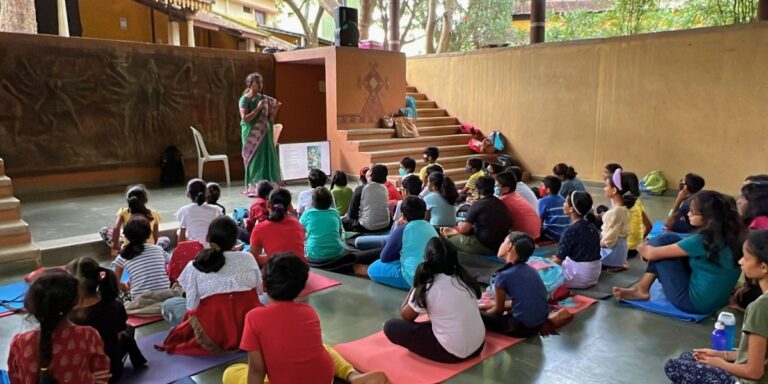
Ideally the curriculum should be a gentle guideline rather than a rigid, inflexible structure. The curriculum should be objective or goal focused rather than on the methods to achieve that goal. It should give each teacher the flexibility to adapt the curriculum to the needs of individual learners. This is a tough ask but we must invest time and resources into developing pedagogies that make this possible.
Click Here For an example of one such attempt
the impact of an involved and engaged teacher
Such perceptive teaching creates a powerful realization within the student: they see that their teacher is truly present—an alert, conscious being who recognizes their internal state and stands ready to provide meaningful guidance. This recognition builds a vital bridge of trust and connection between teacher and learner, across which extraordinary learning can flow.
This connection represents a crucial step in what I call “activating the learner.”
While Sri Aurobindo is correct that nothing can be forcibly taught, students can be inspired to learn when we create the right environment and awaken their intrinsic motivation. The activated learner becomes a willing, engaged participant in their own education—the ultimate goal of genuine teaching.
Read: You only see what you are ready to see!
Gunas: The Three Basic Forces in Samkhya Philosophy
According to Samkhya philosophy, everything in the universe comes from three basic forces:
Sattva – harmony and purity
Rajas – activity and passion
Tamas – inertia and darkness
We can’t see these forces directly, but we can notice their effects in the world.
Every object or thing can make people feel pleasure, pain, or nothing at all. Something might make one person happy, another person sad, and a third person might not care about it at all.
How the Three Forces Work in Our Lives
Rajas (the active principle) serves as a transformative force in our lives. It can:
Transform tamas (inertia) into sattva (clarity)—directing energy toward positive growth
Convert sattva into tamas—depleting our mental clarity through misdirected activity
We can harness rajas in two distinct ways:
Channel rajas to cultivate sattva, enhancing meditation and higher consciousness
Allow rajas to increase tamas, resulting in lethargy and mental dullness
The optimal state requires balanced rajas:
Excess rajas → physical restlessness and mental agitation
Insufficient rajas → dysfunction in the overall guna system
External factors (substances, excessive worry, disturbances) disrupt this natural equilibrium of rajas. According to Samkhya philosophy, restoration comes through deliberately increasing sattvic activities rather than fighting against any guna. This approach reveals how sattvic predominance creates:
(1) Mental lightness
(2) Genuine happiness
(3) Clear knowledge
(4) Inner peace
While sattva itself doesn’t contain permanent happiness, its pure nature acts as a reflective medium for consciousness. When sattva dominates our mental state, it functions as a clear mirror reflecting the peace and happiness inherent in pure consciousness. Thus, the earlier in the education process we focus on learning, studying, managing and utilizing the mind the better.
The True Basis of Education
Sri Aurobindo articulates what should be the real foundation of education: “The true basis of education is the study of the human mind, infant, adolescent and adult. Any system of education founded on theories of academic perfection, which ignores the instrument of study, is more likely to hamper and impair intellectual growth than to produce a perfect and perfectly equipped mind… He has to work in the elusive substance of mind and respect the limits imposed by the fragile human body.”
When I once asked a prominent physicist about the purpose of science and whether the mind of the scientist matters, he replied that the question made no sense. He maintained that scientists aren’t interested in their own minds or the effect of their studies on their consciousness—they only care about objectively examining their subjects while building on the work of previous scientists.
Swami Sarvapriyananda offers a contrasting perspective, noting that Indian thinkers and scientists clearly understood that the purpose of all study and investigation is to remove avidya (ignorance) and realize the true nature of the self.
Education that Nourishes the Soul
True learning should create joy in the learner. It should generate insights, spark imagination, inspire wonder, challenge and stimulate the mind, transform mental models, and leave the student with valuable life lessons. Education should help learners understand their role in the universe and their relationship with themselves, others, all living beings, the planet, and the cosmos itself.
Is our current education system accomplishing any of this? Why are children stressed about school, studies, and exams if education is supposed to be a journey of discovery and growth?
Certainly, there is some sense in separating spiritual education from vocational training, but not to the extent that we’ve done in modern times. Learning should create joy in the learner, which happens when it generates insights, sparks imagination, inspires wonder, challenges and stimulates the mind, transforms mental models, and provides valuable lessons. Education should help learners understand their place in the universe and their relationship with themselves, others, all living beings, the planet, and the cosmos.
Authentic, deep learning isn’t just about accumulating information. It psychologically settles a person, producing a profound satisfaction that nothing else can match. When done right, education nourishes the soul and touches the heart. It can put learners in a state of flow where they become so absorbed that they lose track of time and remain undisturbed by external distractions.
Does our current educational approach achieve these outcomes? The answer is painfully obvious.
Read: Happiness is not the dish: it’s the main ingredient!
The Wisdom of Tradition
Should every generation have to figure out these fundamental truths from scratch? Ideally not. That’s why traditional Indian culture developed sampradayas (traditions) and the Upadesha method (direct instruction) of transmitting knowledge.
“Sampradāya” implies transmitting spiritual knowledge in the most effective way possible. Whatever is shared must be preserved without losing its essence. Thus, sampradaya represents an unbroken chain of communication between gurus and disciples across generations.
“Upadeśa” means that what has been handed down through sampradaya is assimilated through texts along with their meanings and significance not just rote learning. Students should understand these teachings through Anubhava (personal experience) and through relishing or savoring the knowledge. The method of maintaining continuity through practice and experience is called Upadeśa.
Our tradition emphasizes the importance of practice and personal experience as opposed to mere informational education. Today’s education is more like visiting a zoo where you observe caged animals for a fee and imagine how they might behave in the wild. Actually, it’s even more removed than that. Modern education is more like seeing pictures of animals in a zoo and reading essays about them. It’s one thing to see a picture of Yakshagana and read about it in a textbook while being taught by a teacher who has never witnessed a performance; it’s entirely another to visit an Udupi village and experience a live performance seated among the villagers who have preserved this art form for centuries.
Technology Without Wisdom: A Dangerous Path
Technology that isn’t tempered and guided by a vision of social well-being—that doesn’t question itself and assumes unlimited growth is possible—is incomplete and dangerous. Today’s education and industry glorifies technology without sufficient critical evaluation of its purpose, ethics, methods, effects, consequences and negative outcomes.
Simultaneously, humanities disciplines that remain oblivious to technological developments and their impact on human life are equally blind. Current humanities departments in most universities are focused on teaching ideologies or specific narrow points of view rather than help students develop a more balanced and holistic mind and thinking that can temper excessive technological focus. It is time our humanities departments introduced a systematic study of the four purusharthas – Dharma, Artha, Kama and Moksha.
Neither technical knowledge without ethical grounding nor philosophical insight without practical application can address the complex challenges we face.
The fragmentation of knowledge into specialized disciplines has created experts who know more and more about less and less, while lacking the capacity to integrate their knowledge into a coherent whole. Scientists develop powerful technologies without considering their social implications; economists propose models that ignore environmental constraints; politicians make decisions without understanding scientific evidence; and spiritual leaders sometimes offer guidance disconnected from contemporary realities.
What we need isn’t more specialized knowledge but wisdom—the ability to see connections, understand complex systems, recognize patterns, and make decisions that account for both immediate needs and long-term consequences. This integrative wisdom was once central to educational traditions in India but has been largely abandoned in favor of technical expertise and economic utility.
Rediscovering Maturity
“Real maturity is observing your own inner turbulence and pausing before you project how you feel onto what is happening around you.” This self-awareness and emotional regulation should be a primary goal of education. Instead, our schools primarily teach content while neglecting the development of the self.
Education should produce this maturity—the capacity to understand oneself, regulate emotions, consider multiple perspectives, and act with compassion and wisdom. Yet our current approach fails to cultivate these essential human capacities, focusing instead on standardized testing, credential acquisition, and career preparation.
A Path Forward: Integrating Ancient Wisdom with Modern Knowledge
The challenge before us isn’t to reject modern education but to transform it by integrating the wisdom of traditional approaches with contemporary knowledge and methods. This doesn’t mean uncritically accepting everything from the past but recognizing that traditional educational systems often addressed aspects of human development that modern approaches neglect.
From the Indian tradition, we can draw several principles that might guide educational reform:
Recognition of individual nature (Swabhava): Education should help students discover and develop their unique qualities, talents, and purpose rather than forcing everyone into the same mold.
Integration of knowledge, action, and devotion: Learning should engage not only the intellect but also the will and the heart, preparing students to live lives of meaning and purpose.
Direct experience (Anubhava): Education should emphasize firsthand experience and practical application rather than merely abstract knowledge.
Teacher-student relationship (Guru-shishya): Personal mentorship and guidance remain essential for deep learning and character development.
Harmonizing Approaches: Educational approaches should help students develop harmony, clarity, and balance in their lives rather than simply driving activity and achievement.
Common sense and clear thinking: Education should cultivate basic reasoning abilities and sound judgment applicable across domains.
Integration of life domains: Learning should help students integrate various aspects of life rather than fragmenting existence into disconnected compartments.
These principles don’t require abandoning modern knowledge or technology but incorporating them into a more comprehensive vision of human development. They suggest an education that prepares students not only for careers but for meaningful lives—lives characterized by purpose, wisdom, compassion, and joy.
Conclusion: Towards a New Educational Paradigm
The crisis in modern education reflects a deeper crisis in our understanding of the purpose of human life itself. Rediscovering this purpose requires integrating traditional wisdom with contemporary knowledge—not returning to pre-modern models but creating new approaches that honor education’s transformative potential. True education transforms lives, helping students become not merely knowledgeable but wise, not just skilled but virtuous, not simply successful but fulfilled. Innovation does not always have to be in technological applications. Innovation in education is the need of the hour.
This transformation demands reconsideration of both content and methodology. We must create educational environments that:
(1) Nurture the whole person
(2 ) Honor individual differences while fostering common understanding
(3) Integrate theory with practice and intellect with emotion
(4) Connect knowledge across disciplines into a coherent vision of reality
The path forward begins with acknowledging our current system’s fundamental drawbacks. By drawing on the Bhāratīya Jñāna Paramparā while embracing modern knowledge and tools, we can create an educational paradigm that serves both individuals and society—preparing students not just for jobs but for lives worth living.
As Abhinava Shankara Bharati of Kudali Sringeri Matha beautifully articulates, true learning embodies five principles:
Kakṣā Nirapekṣatā – Learning not confined to classrooms
Kāla Nirapekṣatā – Learning not restricted by time
Pustaka Nirapekṣatā – Learning not dependent solely on books
Parīkṣā Nirapekṣatā – Learning not centered around exams
Sarkāra Nirapekṣatā – Learning not reliant on government systems
True education awakens souls to their potential, helps each person discover their unique gifts and purpose, and integrates diverse insights into a coherent understanding of reality. By recovering this holistic vision, we can address not just the crisis in our schools but the deeper crisis of meaning that pervades modern society.
सा विद्या या विमुक्तये…
True Vidya is that which liberates (a person from avidya).
The goal is not merely better educational institutions but a better world—one characterized by wisdom, compassion, and genuine human flourishing. This approach bridges ancient wisdom and modern knowledge, creating an education system that transforms individuals, enriches communities, and fosters a society guided by wisdom rather than mere economic growth metrics. However, there is still more to say on this. More on that later.
Next: A more detailed on the “How to fix it?” portion is coming soon…

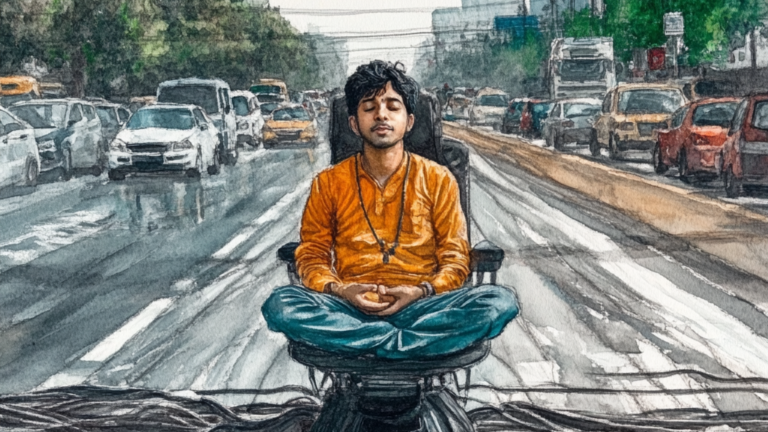

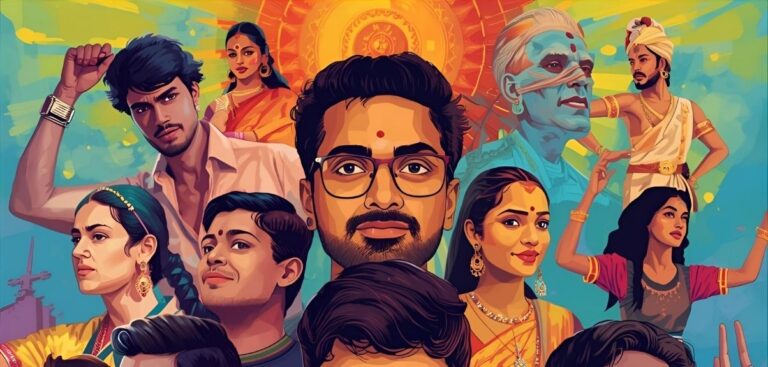
Insights from Sri Abhinava Shankara Bharati of Kudali Mutt, Swami Sarvapriyananda and Vinay ji’s own experience makes this article like a white paper on the way forward for education in India.
Thank you 🙏🏼
Well researched and timed piece.
Society needs to be deschooled. Industrialised education is at an end, opening avenues for wisdom traditions that were destroyed 300-odd years back. Thank you for this article.
Well researched and timed piece.
Society needs to be deschooled. Industrialised education is at an end, opening avenues for wisdom traditions that were destroyed 300-odd years back. Thank you for this article.
I’ve noticed how luck and strategy blend in games like Super Ace Jili. The free spins and wilds really boost the excitement while keeping odds in check.
Understanding casino game odds is key to smart play. JiliPH offers a great mix of slots and live games-perfect for both new and seasoned players. For a smooth start, check out Jili77.
Jili No1 is a great example of how AI can enhance online gaming strategies. The Jili No1 platform stands out for combining tech-driven insights with a vast game library, making it a smart pick for serious players.
Love the breakdown-it’s clear and strategic. For those looking to apply similar tactics in a real-time setting, platforms like SuperPH11 offer a dynamic test bed with live dealer games and fast payouts. Solid read!
Awesome https://shorturl.fm/oYjg5
Good partner program https://shorturl.fm/N6nl1
Cool partnership https://shorturl.fm/FIJkD
Very good partnership https://shorturl.fm/68Y8V
Awesome https://shorturl.fm/5JO3e
Good partner program https://shorturl.fm/N6nl1
Cool partnership https://shorturl.fm/XIZGD
https://shorturl.fm/5JO3e
https://shorturl.fm/5JO3e
https://shorturl.fm/oYjg5
https://shorturl.fm/eAlmd
https://shorturl.fm/hevfE
https://shorturl.fm/hQjgP
34qenj
lifx4c
sbxo1d
Join our affiliate program and watch your earnings skyrocket—sign up now! https://shorturl.fm/DUMqf
Earn passive income this month—become an affiliate partner and get paid! https://shorturl.fm/IbR9A
Be rewarded for every click—join our affiliate program today! https://shorturl.fm/atwHP
Apply now and receive dedicated support for affiliates! https://shorturl.fm/BhbNM
Grow your income stream—apply to our affiliate program today! https://shorturl.fm/Ap6EJ
Sign up now and access top-converting affiliate offers! https://shorturl.fm/5Lmmd
Turn your network into income—apply to our affiliate program! https://shorturl.fm/1fhB1
Refer and earn up to 50% commission—join now! https://shorturl.fm/4opcq
Join our affiliate family and watch your profits soar—sign up today! https://shorturl.fm/fcWjI
Share our products, reap the rewards—apply to our affiliate program! https://shorturl.fm/kYh71
Start sharing, start earning—become our affiliate today! https://shorturl.fm/fXpsx
Get paid for every click—join our affiliate network now! https://shorturl.fm/H3nNN
Promote our products and earn real money—apply today! https://shorturl.fm/Ndnj5
Tap into unlimited earning potential—become our affiliate partner! https://shorturl.fm/kOQjo
Partner with us for generous payouts—sign up today! https://shorturl.fm/iL7DP
Share your link and rake in rewards—join our affiliate team! https://shorturl.fm/uZoiS
Join our affiliate community and earn more—register now! https://shorturl.fm/1e2Kc
Monetize your influence—become an affiliate today! https://shorturl.fm/1hGZG
Invite your network, boost your income—sign up for our affiliate program now! https://shorturl.fm/qclIo
Turn your traffic into cash—join our affiliate program! https://shorturl.fm/251ZY
Grow your income stream—apply to our affiliate program today! https://shorturl.fm/gBwdi
Tap into a new revenue stream—become an affiliate partner! https://shorturl.fm/zYTbj
Join our affiliate program and start earning commissions today—sign up now! https://shorturl.fm/2Dmcr
Refer friends, earn cash—sign up now! https://shorturl.fm/lGkmR
Join our affiliate program today and start earning up to 30% commission—sign up now! https://shorturl.fm/AcYdC
Turn referrals into revenue—sign up for our affiliate program today! https://shorturl.fm/D5hTS
Get started instantly—earn on every referral you make! https://shorturl.fm/uEDrj
Partner with us for high-paying affiliate deals—join now! https://shorturl.fm/QvflY
Share our products, reap the rewards—apply to our affiliate program! https://shorturl.fm/JoIoY
Unlock exclusive affiliate perks—register now! https://shorturl.fm/1BcV7
Drive sales, collect commissions—join our affiliate team! https://shorturl.fm/upK14
Share our products and watch your earnings grow—join our affiliate program! https://shorturl.fm/NUwQA
Maximize your income with our high-converting offers—join as an affiliate! https://shorturl.fm/4ErMx
https://shorturl.fm/x6tMc
https://shorturl.fm/eFObA
https://shorturl.fm/KMhKa
https://shorturl.fm/Z6aEr
https://shorturl.fm/ge5vh
https://shorturl.fm/yysMJ
https://shorturl.fm/8jWkd