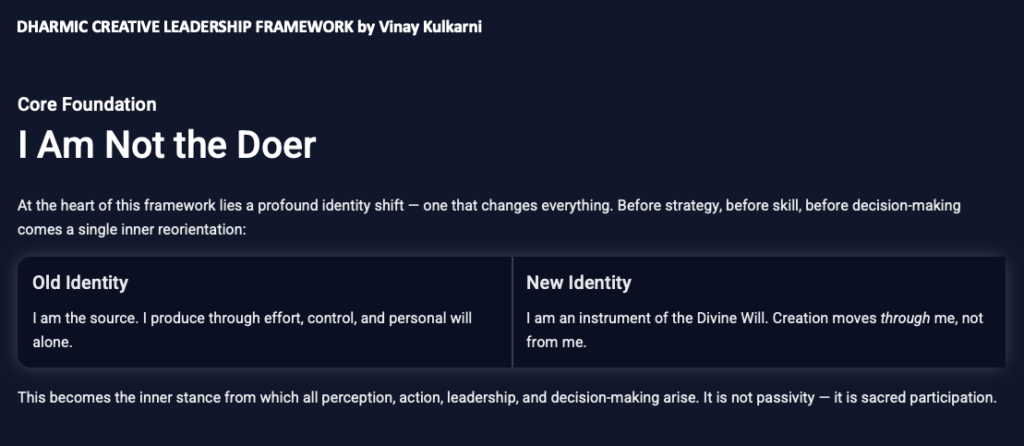
Dharmic Creative Leadership Framework
On why creativity is really about receptivity — not transmission!
Using an elephant gun to shoot a fly!
This, I have come to see, is the condition of the Buddhi almost everywhere.
The Buddhi is an extraordinary instrument — the faculty of discernment, of clarity, of right decision. And yet, in the daily life of a modern entrepreneur, it is handed the most absurd tasks. Strawberry ice cream or raspberry? Tan shoes or blue? The Buddhi, which was designed to discern Dharma from Adharma, truth from appearance, essential from peripheral, is reduced to a shopping assistant. And we wonder why decisions feel exhausting. Because there is an inner voice that tries to guide us on the path of dharma but our training and education goads us to focus only on wealth maximization and blinds us to everything else.
Dharma is that which sustains everything in the world and is necessary to ensure everyone’s wellbeing. We defined the four-fold framework of Dharma-Artha-Kama and Moksha. This works if the buddhi is trained from early on to understand and apply the principles of dharma. And artha (wealth) is dharmically earned. And Satvic desires (Kama) are fulfilled within the means of dharmically earned wealth slowly progressing towards moksha which is the freedom from everything that is false. If the harmonizing principle of dharma and the elevating principle of moksha are missing, then you are operating in the purely “Artha-Kama” plane. Operating in the Artha-Kama plane and within an ethical framework based on rules the idea of sustainability becomes external to the functioning of an organization. And this is the current reality based on imported organizational models and imported management and governance models.
Thus, despite having been born with the faculty of “buddhi”, many entrepreneurs make decisions that are not aligned with dharma and cause large scale harm in the world.
These are the Five Dharmic Filters I recommend to all entrepreneurs:
- Consciously Avoid Harm,
- Create Tangible Good,
- Strengthen the Existing Traditional Social Fabric,
- Sustain Healthy Lifestyles, and
- Protect & Regenerate Nature—applied across eight domains: individual, society, nation, world, economy, ecology, culture, and health.
The tragedy is that we have never been taught that we have them and how to use them. Which is why not everyone is creative — not because creativity is rare, but because the instrument remains unexamined and unused.
The Fourfold Inner Instrument
While the whole world calls it just the mind, The Indian tradition (there are many schools of thought) gives us a precise cartography of the inner instrument, the Antaḥ-karaṇa. Four faculties work together: Manas (the gathering mind), Buddhi (discerning intellect), Chitta (the memory-storehouse of impressions), and Ahaṅkāra (the I-maker).
Ahaṅkāra in a leader lays claim to all the good that happens. When Ahaṅkāra softens, something remarkable happens — you begin to see others as part of yourself. You stop seeing your people as numbers. You start seeing them as conscious beings and not machines.
This is not a minor semantic quibble. Virtually all management theory we have inherited is borrowed from manufacturing. Output. Performance management. Throughput. Efficiency. We apply a vocabulary meant for machines to human beings — who are made of consciousness. Until the vocabulary itself changes, the relationship cannot.
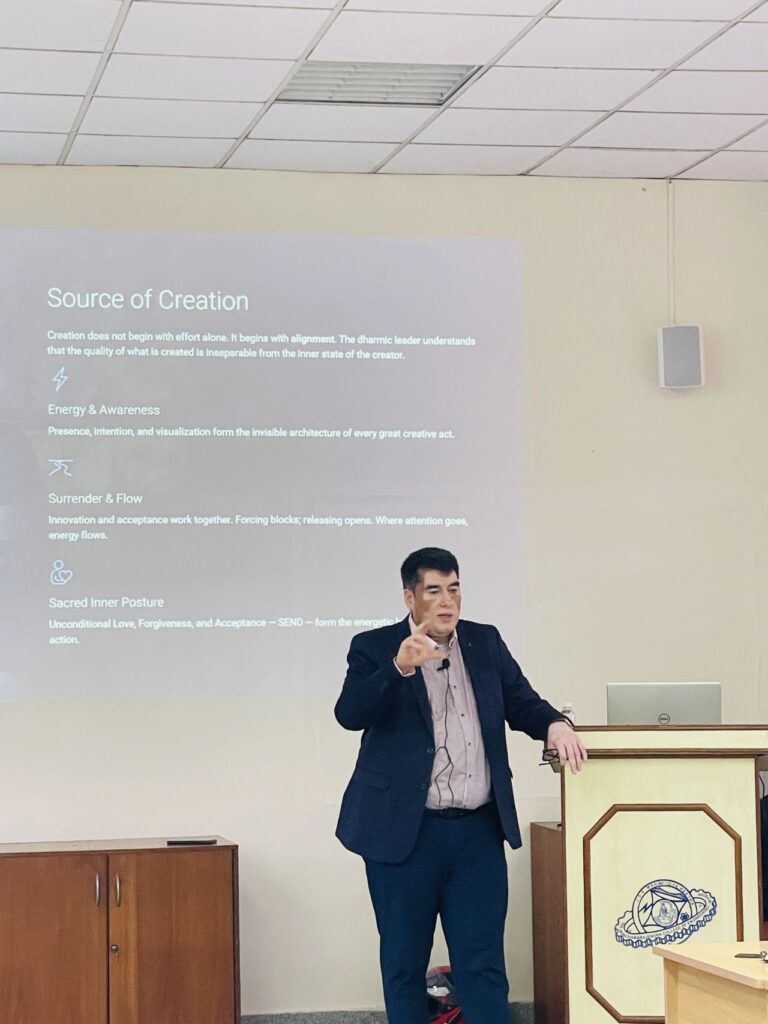
Creativity Is Reception, Not Transmission
Here is a question worth sitting with: when a thought arises in you, are you creating it, or are you receiving it? Neuroscience seems to be coming around to the idea that we are receiving thoughts instead of creating thoughts (as we have always believed) and the brain predicts what is happening in front of it based on past data rather than see things as they are happening. Thus, cognition is clouded by the residual memories of the past.
If you observe closely, you will notice you are not the author of your thoughts. They arrive. You are not a transmitter. You are a receiver. This single shift in self-understanding reorganizes everything — how you conduct meetings, how you sit with a customer, how you design a product.
You cannot be creative on demand, the way a factory produces units. Nobody walks into an office and says, Today, I will create a Nobel Prize-winning invention. It does not work that way. Creativity has conditions. First, you must understand its source. Second, you must understand yourself. And third, you must place yourself in the receptive posture.
I often frame it around three qualities I call the CEO of the inner life — Creativity, Enthusiasm, Ownership.
Creativity without enthusiasm is inert; the idea never leaves the notebook. Enthusiasm without creativity burns bright and solves nothing. Creativity with enthusiasm but without ownership evaporates — someone else finishes the work, or no one does. All three must be present. And each of them rests on an even deeper foundation — awareness. It is like the fire triangle – you need fuel, oxygen and a spark to create fire. And the number one, most important ingredient of innovation is a problem. Apply CEO to problem solving and you get creativity which leads to innovation.
Energy Follows Awareness
Right now, as you read this, you are sitting somewhere. Perhaps on a two-hundred-acre campus. Hundreds of things are happening around you — a bird nesting in a tree, a conversation in the next room, a leaf turning colour. Are you aware of any of it? Are you even aware of what is happening inside your own mind?
Most of the time, we are not.
For creativity to meet a real problem, one must enter a state of heightened awareness. Three-hundred-and-sixty-degree attention. Complete receptivity. And crucially — one is not creating when one is listening to the problem being described by a customer. This is not the moment to generate solutions. But most people start generating before they have even heard what the problem is. I have watched it happen a hundred times — a customer has barely begun speaking and the entrepreneur across the table is already mentally building a proposal. We have worked with many designers. We have built many websites. We have seen this before. The client has said three sentences, and already the designer has stopped listening. An entrepreneur who cannot listen with his body and mind will not make a great entrepreneur.
That entrepreneur has no interest in understanding the customer. Worse — he does not even have the capacity to. The Chitta is so cluttered, the Manas so busy and the Buddhi so untrained and mis utilized that there is no room to receive. It is like the condition of the American priest whose mind was too full to learn from the Japanese Zen master.
Presence, Intention, Visualization
The architecture of receptive creativity, as I have come to understand it, has five movements.
The first is invocation — the acknowledgement of a field larger than yourself. The second is Saṅkalpa, intention. The third is energy. The fourth is expression. The fifth is the outcome.
Most management literature has reduced Saṅkalpa to the ritual of a vision statement. Bring everyone off-site for a day, buy nice food, write vision and mission and values on butter-paper, photograph it, frame it, hang it on a wall. I did this for companies for many years. And I noticed — once hung, it had no life. Business continued as usual. The wall became decoration.
Saṅkalpa is something else entirely. It is the quiet, unshakable seed of intent you plant inside yourself before any outward action. In India, even the barber knows this. Even the vendor selling fruit on the pavement knows this — before starting the day’s work, a small flame is lit, a moment of acknowledgement is offered. We have labelled this religion or superstition, but that judgement comes from elsewhere. In India, the dichotomy between science and non-science never existed. Our inquiry itself began by observing the cycles of nature — that is Ṛta. From Ṛta comes Satya, truth. From Satya comes Dharma — having known the truth, what is my duty? What do I owe my customers? My students? The team that builds with me? The ecosystem that supports me?
This is the foundational architecture. It has no conflict with science because it is science — the science of how to live rightly amidst what is.
The Visualisation That Receives
When people hear the word visualisation, they imagine the practitioner producing an image, sculpting it in the mind. But there is another kind of visualisation — one where you are receiving the image.
Because visualisation is not only for the creator. It is also for the listener. When someone is describing their problem to you, are you constructing their picture inside your own mind? Can you see what they see?
This is why Vivekananda said — if he had another chance at school, he would study nothing. He would only learn how to concentrate the mind. Because with a focused mind, any problem can be solved.
Surrender and Flow
Once you have stopped the mental chatter, once you have stopped pre-generating solutions while the other is still speaking, a quieter state opens. This is surrender — not passivity, but the pause in which receptivity becomes possible.
This is hard to explain in words. The capacity has to be developed in practice, not merely described. A two-thousand-page manual about orange juice is useless until you drink orange juice. I can offer you the pamphlet. The drink itself is found in Sādhanā.
Honestly, how many of us can do this — enter a state of inner silence while a customer describes their problem? I once worked with an employee who would hear roughly fifty percent of what was said. The rest of the time his mind had gone somewhere and returned, and whatever he had missed he decided must not have been important. He missed the most important things every single time. You have surely seen the famous diagram — what the customer asked, what the company delivered. Why does that gap exist? Only Indian thought has an adequate explanation. It is not linguistic misunderstanding. It is not cultural difference. It is that the listener was not there at all. Physically present, mentally absent.
And someone will say, but this is spirituality, this has nothing to do with business. How little one must know about business to say that. The only instrument you have to build a business is your mind. Rather, your Antahkarana. In fact your manas and buddhi can be your best friends if properly trained and aligned with the right goals.
The Five Factors of Success
Sri Kṛṣṇa names five factors of any successful action.
अधिष्ठानं तथा कर्ता करणं च पृथग्विधम् |
विविधाश्च पृथक्चेष्टा दैवं चैवात्र पञ्चमम् || 14||
adhiṣhṭhānaṁ tathā kartā karaṇaṁ cha pṛithag-vidham
vividhāśh cha pṛithak cheṣhṭā daivaṁ chaivātra pañchamam
BG 18.14: The body, the doer (soul), the various senses, the many kinds of efforts, and Divine Providence—these are the five factors of action.
Of these five, which one can you work on? The ground is largely given. The outcome is largely unseen. The intensity of your effort with a sharpened instrument is the key.
Think of the master chef and the sous-chef. If the sous-chef has cleaned the vegetables, chopped them precisely, laid out the masalas, prepared the mise en place — the master chef arrives, works for five minutes, performs his magic, the dish is complete. But if the sous-chef has brought rotten vegetables and missing ingredients, the master chef will still arrive, will still perform his art, but the result cannot be what it should be.
Refine and sharpen your mind / perception and put your most intense effort. While hard work has always been talked about and taught almost nowhere is a person taught how to master his mind.
The Problem as Guru
I keep saying this to entrepreneurs — become intimate with the problem. Most of the failures in the world are not failures of execution. They are failures of comprehension. The solutions produced by a mind that is not trained on dharma gives birth to the next big problem.
In systems engineering we say — a problem correctly defined is half-solved. To a person with only a hammer, every situation looks like a nail. If you are carrying a pre-formed solution, you will hunt for a problem that fits it. The healthier direction is the reverse. Let the solution emerge from the problem — because the solution is always contained in the problem itself.
When you sit with a problem long enough, it begins to speak to you. This is not metaphor. In parts of South America, healers use a plant called Shankapieda — stone-breaker — for kidney stones. Researchers went in and asked, you have never seen a kidney. You have never seen a stone. How did you know? The healer said, the plant told me. Westerners dismissed this as superstition, until a new field emerged called biosemiotics — the study of communication between living systems, including between plants and humans. Look it up. Science is beginning to catch up with what our traditions always knew — everything is conscious. It is not a human speaking to a plant. It is consciousness speaking to consciousness. In fact, all things are in a vast field of unified consciousness.
If you become that intimate with your customer’s problem, something extraordinary happens — you can articulate the customer’s problem better than the customer can. And that is what the customer will label as an expert. Contrast this with the doctor who takes no history, orders no tests, and prescribes three pills — red one in the morning, blue one at noon, yellow at night, come back in a week. But what is my problem, doctor? He has no idea. He has given you the solution without knowing the question.
Most entrepreneurs I meet are exactly like this. Given five minutes on stage, they begin to speak, and they never state the problem. They leap straight to the product. The number one ingredient for innovation is not creativity, not capital, not talent. It is the problem.
Where Your Attention Goes, Your Energy Goes
Peter Drucker said it. Many have said it. But it is worth returning to — attention and energy are the same phenomenon viewed from two angles. Whatever you attend to grows.
We must distinguish here. There is the problem you sit with as an entrepreneur — a defined, solvable challenge your customer is facing. And there is the problem of complaint — the existential grumbling that has no solution because it is not seeking one. These are entirely different. One refines you. The other depletes you.
It’s not about making a laundry list of all possible problems and getting rid of them. It’s about knowing the distinction between the vital few and the trivial many. The Pareto principle is not arbitrary arithmetic — it is a practical instruction about where to direct the scarce resource of your attention.
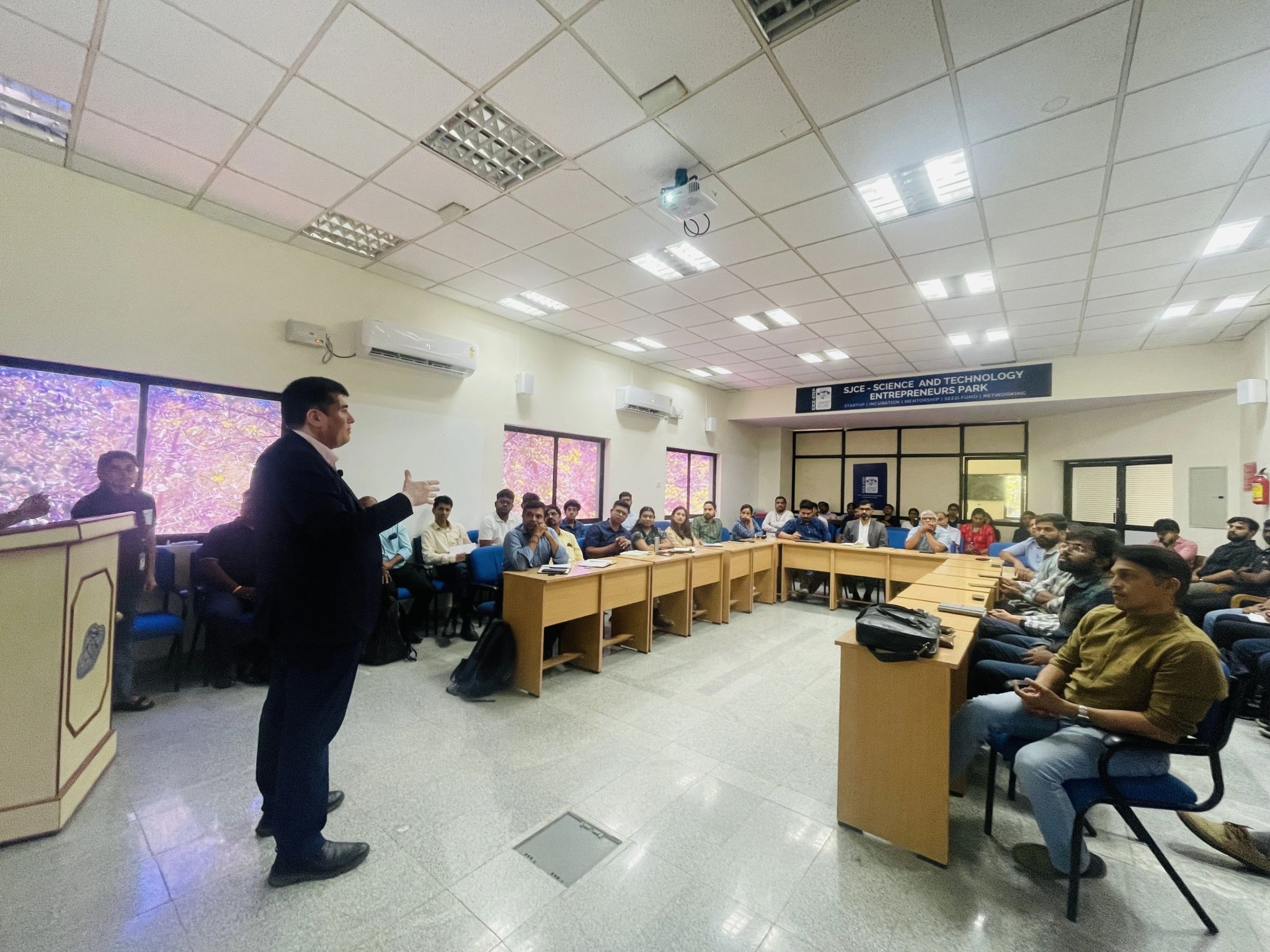
When I teach a class or deliver a talk, I hold a Saṅkalpa — let whatever these people need to hear the most come through. Not what they want. What they need. If you mean it, if you have truly moved the intention and connected with that larger field, it will happen. But the condition is that you must step aside. You must not be the one performing. Your intent must be that the other benefits — not that you impress. The receptivity and state of mind of the audience also plays a big role. Sometimes they do not want to receive because they have pre-judged, made up their minds in advance. And sometimes we may forget to activate the listeners which makes them receptive. You want to give but they should also want to receive.
From Ingredients to Expression to Outcome
Invocation. Saṅkalpa. Energy. Then expression — the outward action, the processes, the craft. Then outcome.
Most entrepreneurs begin at expression. They skip the first three and wonder why the outcomes are hollow. The creative and innovative mind is not built by stacking more tools on top of an unexamined inner life. It is built by quieting the Chitta, giving the Manas a holistic goal, freeing the Buddhi to make proper Dharmic decisions, and allowing Ahaṅkāra to soften. That sequence, in that order, is what produces a leader whose work bears fruit.
The capacity to receive is available to each of us. Whatever you turn your attention toward, you can receive from. This is the forgotten art.
Mental Models
Forty people in a room watch the same event. Forty different reports emerge. Two newspapers describe the same accident with two different chronologies. Why? Because everyone carries a different mental model. You can read the same book and not read the same book. You can look at the same thing and not see the same thing. Every experience is being processed through your inner structure.
So the first question is — are you aware of your own mental models?
What is your idea of business? What is your idea of a businessman? What is your idea of a founder? What does a founder do? Why do your customers come to you? What is your definition of success, right now, at this moment, as you read this?
Your mental models are silently shaping every decision you make. Your idea of cause and effect is shaping your strategy. Your idea of what customers want is shaping what you deliver. Your idea of success is shaping what you are willing to sacrifice.
Before you attempt to scale your business, clean your mental models. Because if you have forty unexamined assumptions, and you hire a hundred people, you will now have a hundred people walking around executing those forty assumptions, multiplying the mess at scale.
A useful exercise — write down what surprises you. What shocks you. What delights you. What upsets you. What scares you. And so on. And then ask, why does this surprise me? What hidden assumption of mine has been violated? The shocks are diagnostic. They reveal the shape of your inner model more clearly than any self-assessment tool. Before you learn the world, learn yourself. Microcosm and macrocosm have the same geometry. Mental models are hidden and need to be exposed and the underlying assumptions have to be tested against reality.
When your mental models are cleaner, your perception becomes clearer, and your decisions become sounder. Because every stage of building anything is a decision. Plastic or paper. Circle or square. What it will be called. Where it will be sold. At what price. How most entrepreneurs make these decisions is by looking at what others in the industry are doing. How many of your choices are genuinely your own original thought?
This is why India, despite sitting on one of the richest knowledge traditions in the world, is not considered innovative. We have stopped using our own tools. Look at the Hoysala temples. Look at Rāmappa temple. Look at Brihadeeshwara. These are not only places of Pūjā — they are engineering masterpieces. The world is finally waking up to this.
So how did we come to discard our own inheritance? A simple analogy. When a small child is holding something delicate and precious, how do you get them to release it? You offer them something shinier. Here, leave that, take this instead. That is what was done to us. Drop that stupid, dead language. Meanwhile, Germany has built twenty Sanskrit research universities. The whole world is studying and learning from what we have been convinced to abandon. The trick succeeded — we dropped it, they picked it up. If we reclaim our own knowledge system, India becomes genuinely innovative. The power of innovation has always been ours. What we lack is the confidence to use it.
The Five Afflictions
Patañjali names five Kleśas — afflictions that cloud the mind. Avidyā (ignorance of one’s true nature). Asmitā (the mistaken sense of a separate, fixed self). Rāga and Dveṣa (attraction and aversion, the two ends of the same stick). Abhiniveśa (clinging to continuation, fear of dissolution).
These five are the reason your inner state is disturbed. And the equation is strict — inner state shapes perception; perception shapes clarity; clarity plus values produces decision quality. If the first term is corrupt, everything downstream is corrupt. You will misunderstand the problem. You will have no clarity on how to solve it. And without a Dharmic value framework, you will find yourself incompetent in front of a genuine challenge — which is when ethical shortcuts begin to appear attractive. Once a shortcut becomes a habit, you are going down the wrong path. Not because the market punishes you — it may not, immediately — but because your instrument has been irreversibly dulled.
Ardhanārīśvara and the End of Binaries
Here is where decolonizing the mind becomes a practical business skill, not an ideological posture.
In the West, thought moves in pendulum swings. The French Revolution, then the counter-revolution. This is the logic of binaries — everything is either good or bad, progressive or regressive, for or against. Something is positioned as better than something else or as the opposite of something else.
Indian thought has a different answer. Ardhanārīśvara — the form in which Śiva and Śakti are one body, one being, the two halves neither opposed nor merged but integrated. Transcend the binary. Integrate the opposites into a higher third.
Many of the creative blocks in entrepreneurship come from exactly this — you have defined the problem as a binary. Either we cut costs or we invest in growth. Either we serve the premium market or we serve the mass market. Either we keep the team small or we scale fast. But what is the third organising principle that dissolves the choice? The Ardhanārīśvara posture is to refuse the binary and look for the integration. Once this habit becomes natural, unbelievable creativity is unlocked. Sometimes you must choose between two options if they have been well studied and well understood. Often the framing of it as a choice between two is arbitrary. It is important to be able to know when a third alternative exists that overcomes being stuck in binaries.
The Work Ahead
Let me recap for you. The most important tool you have is your mind as defined above and it can be sharpened. Sharpening requires Chitta-śuddhi, the cleansing of the inner storehouse. Everything you have lived through — every childhood impression, every daily disappointment, every experience you have registered as trauma rather than as learning — sits in the Chitta. Left unprocessed, it pumps continuously into the Manas, which then pumps distortion into the Buddhi, which then produces decisions you will later regret.
If you had a chance to reconstruct your inner instrument — to make it resilient, clean, and receptive — there is no entrepreneurial problem you could not creatively address. The blood of the Saptaṛṣis already flows in you. The creativity is already inside. It only needs to be activated.
Whatever your business is — whatever its scale, whatever its sector — it can be completely reimagined from the inside. Not by new concepts bolted on the wall. But by changing how you think about your business, how you think about the problem, how you think about the customer, how you think about the product. And by consciously dissolving the contradictions that keep you stuck in binaries.

A Closing Note on Books, and on Finding One’s Path
People often ask me — which books should I read for all of this?
The idea that knowledge will arrive primarily through reading is itself an imported idea.
Take one of the most quoted verses in the world — Yogastha Kuru Karmani. Kṛṣṇa says, establish yourself in yoga, then act. But how do you establish yourself in yoga if you have not learned how to from one who has mastered it? You cannot do it just by reading that sentence. This is the chicken and the egg. Reading the verse cannot answer it. Only practice can. Through practice, your body-mind-Buddhi-Chitta-Karmas align into one, and that is when you become capable of genuinely creative action. You cannot get there through merely reading.
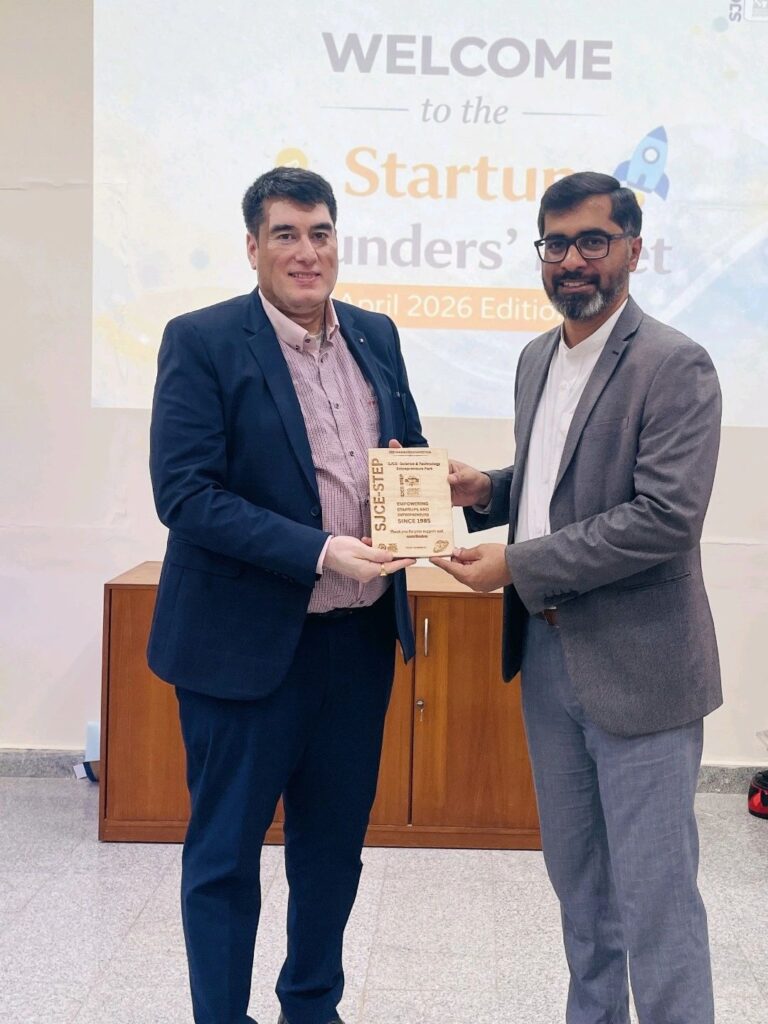
That is why I chose “residential retreats” and “deep dive workshops” as the model for helping people and entrepreneurs evolve. In three days, you can produce enough of an inner shift that a person is ready to go deeper. The transmission requires time. The inner instrument cannot be tuned in forty-five minutes with a handheld microphone.
“An organization cannot grow beyond its people. For an organization to grow and transform, its people need to grow and transform. and that cannot happen through lectures, conferences and cookie-cutter, run of the mill training sessions. this transformation involves a learning journey – and everyone’s journey is unique.” – Vinay Kulkarni
The Alchmi Experience
What happens during an Alchmi retreat? We cannot fully describe it, because each one unfolds uniquely, responding to the specific constellation of leaders present.
What we can tell you is this – Each retreat begins with guided discovery—an exploration of participants’ mental and emotional states, unconscious behavioral drivers, and self-imposed limitations. From there, Vinay creates the exact conditions needed for breakthrough, operating from a state of deep connection with your organization and its people.
His singular intention: that each participant walks away with precisely what they need to take powerful next steps in their growth journey.
Schedule a transformational retreat for your team today: Send a Request