IKS and How It Can Transform Bhāratīya Education
An Experiment in Saṃvāda: Notes from the IKS APEX Meet 2026
A panel of fifteen scholar-practitioners, a roomful of students, parents, teachers, and administrators — and what happens when representatives of every IKS stakeholder group in India shares one structured conversation.
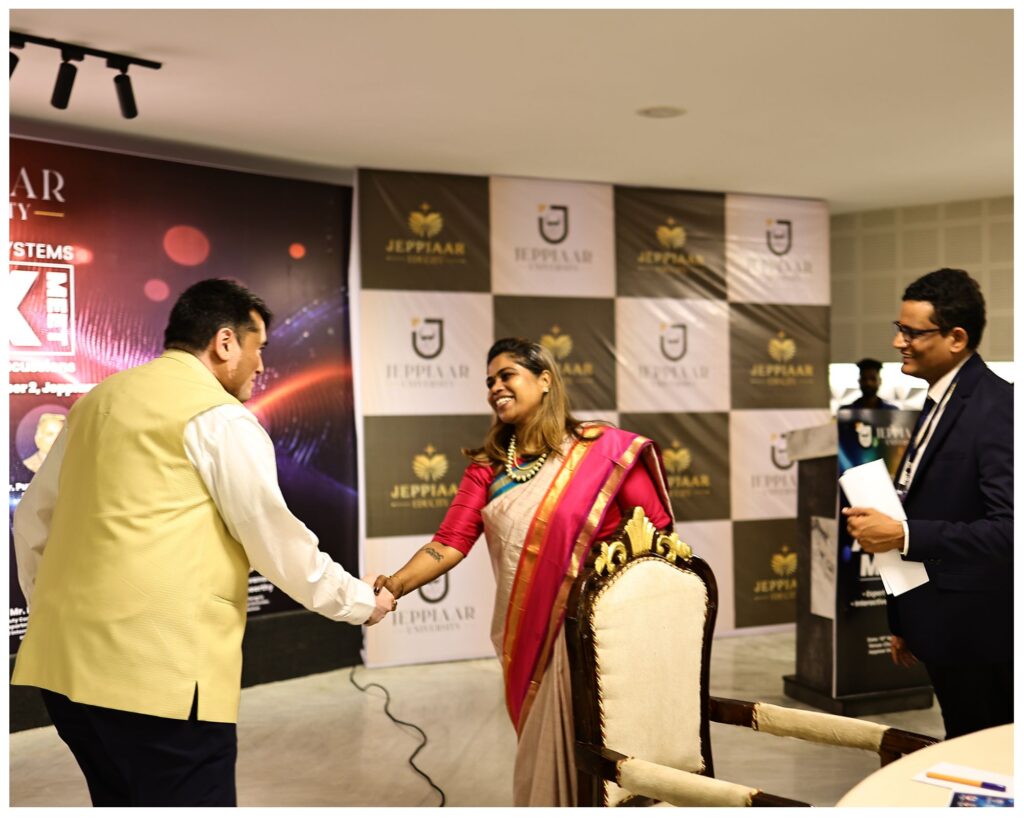
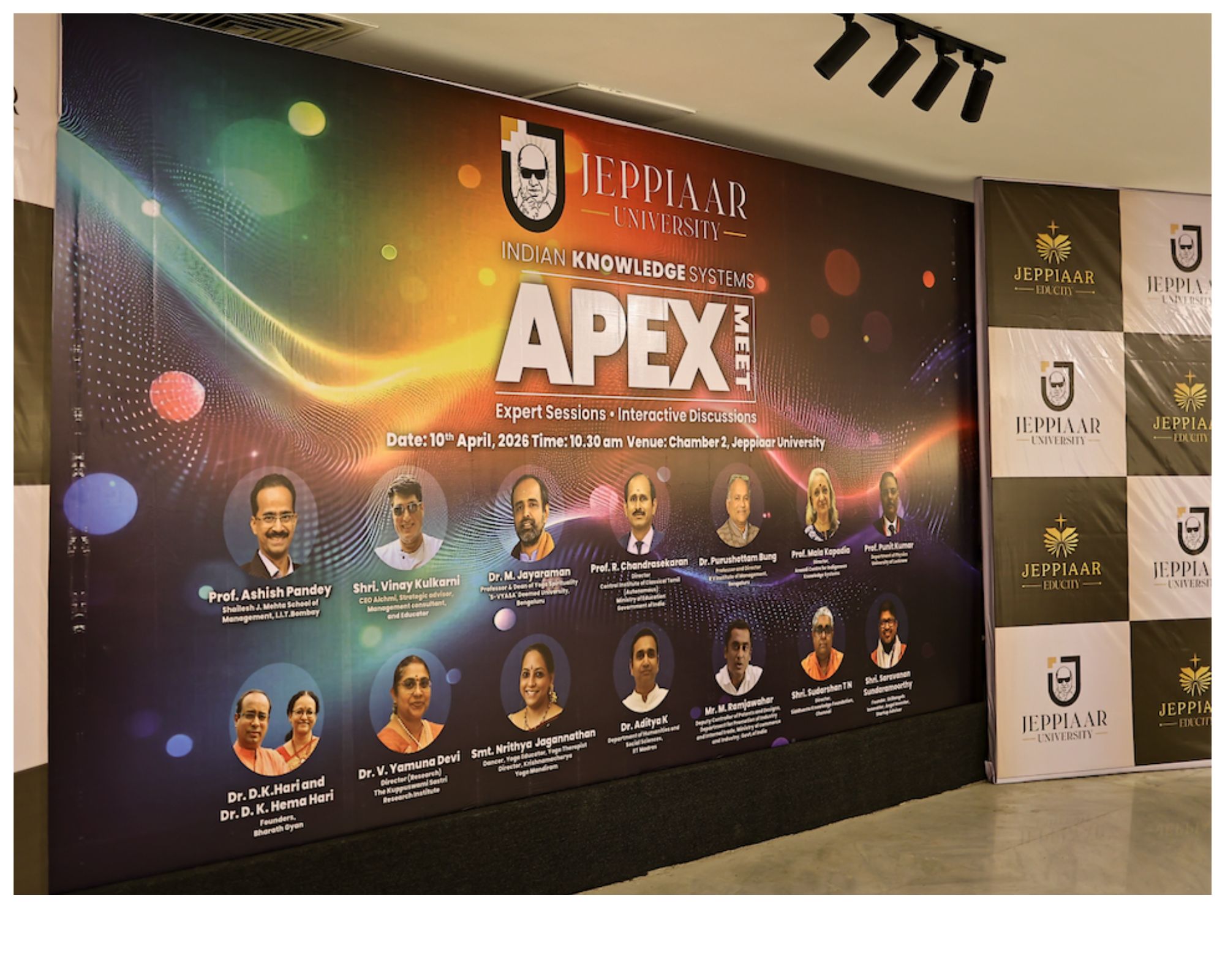
Some gatherings inform you. A rare few rearrange the perspectives of how you see the field. The IKS APEX Meet 2026, held at Jeppiaar University, Chennai on 10 April, was the second kind. Days later, I am still working through what it surfaced.
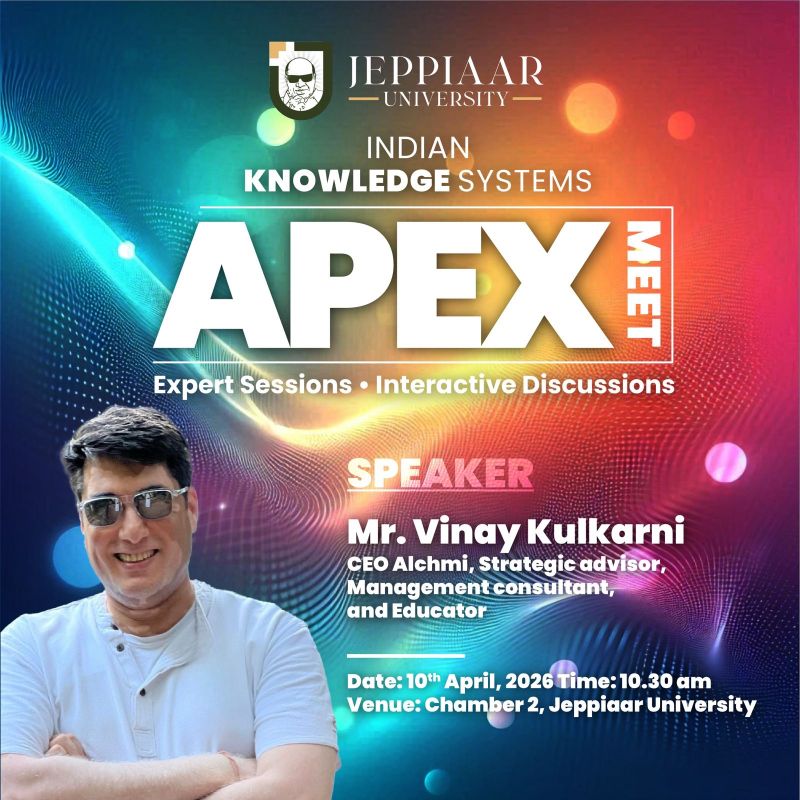
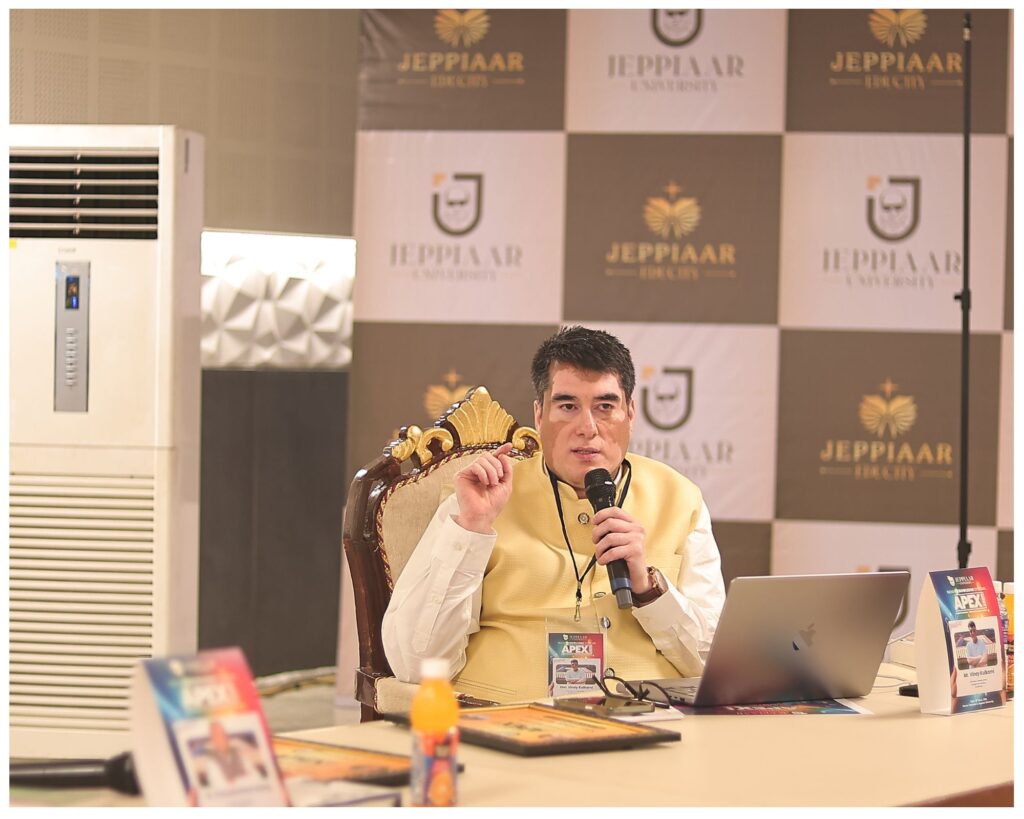
I had the honor and the distinct privilege of moderating a panel of fifteen scholar-practitioners working at the frontiers of Indian Knowledge Systems (that Dr. Kishore and I curated) — and the deeper privilege of watching students, parents, teachers, school and university administrators, educators, IKS scholars, and education enthusiasts step into the same conversation as equals. This is an attempt to remember what happened, what we tried, and what stayed with me.
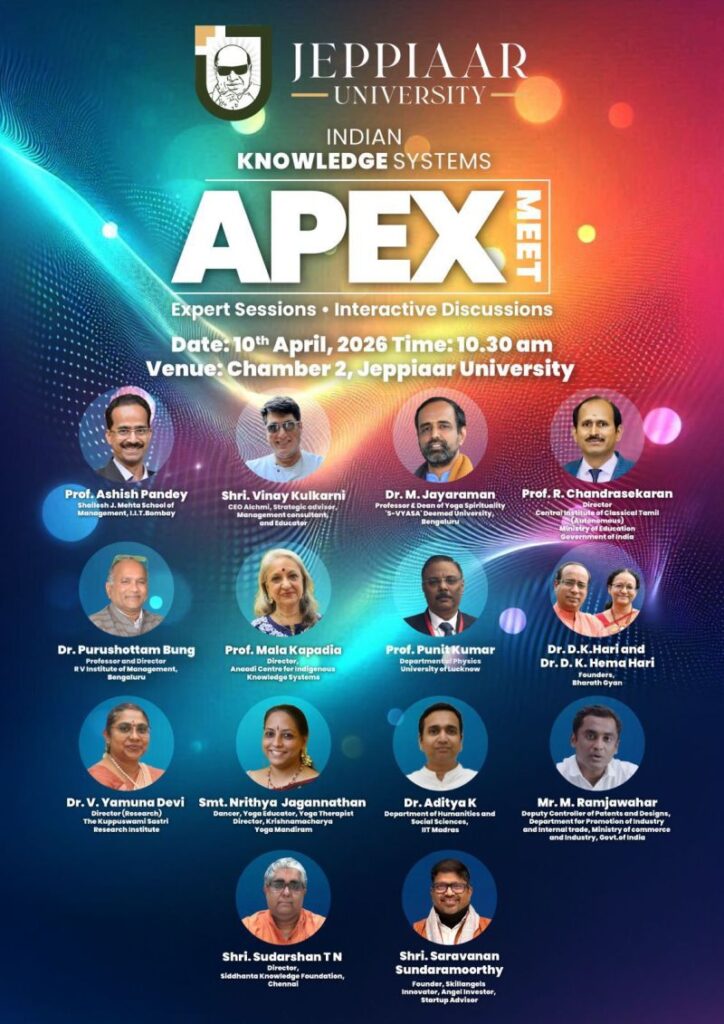
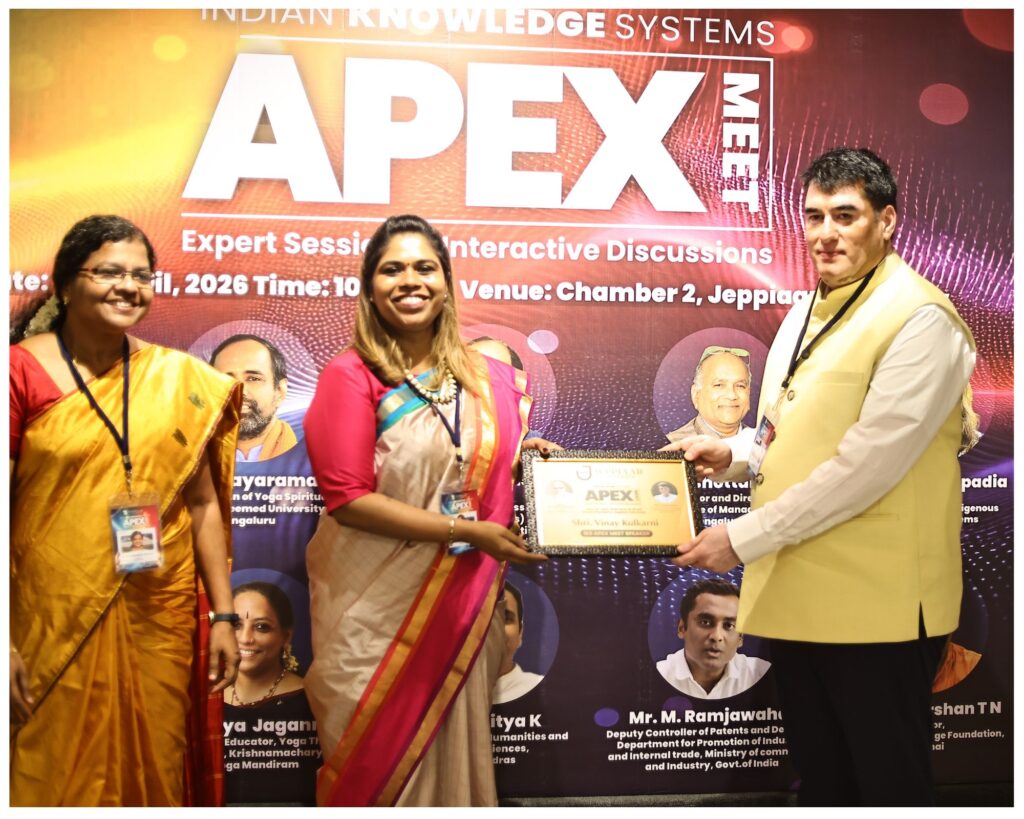
The panel was an experience of Vāda and Saṃvāda — many vantage points, each true from where it stood, none collapsing into the other. This culture of reasoned debate is itself part of what IKS education needs to recover. With deepest gratitude to my fellow panelists:
• Prof. Ashish Pandey, Shailesh J. Mehta School of Management, IIT Bombay
• Dr. M. Jayaraman, Professor & Dean of Yoga Spirituality, S-VYASA Deemed University, Bengaluru
• Prof. R. Chandrasekaran, Director, Central Institute of Classical Tamil (Autonomous), Ministry of Education, Govt. of India
• Dr. Purushottam Bung, Professor and Director, R V Institute of Management, Bengaluru
• Prof. Mala Kapadia, Director, Anaadi Centre for Indigenous Knowledge Systems
• Prof. Punit Kumar, Department of Physics, University of Lucknow
• Dr. D.K. Hari and Dr. D.K. Hema Hari, Founders, Bharath Gyan
• Dr. V. Yamuna Devi, Director (Research), The Kuppuswami Sastri Research Institute
• Smt. Nrithya Jagannathan, Dancer, Yoga Educator, Yoga Therapist; Director, Krishnamacharya Yoga Mandiram
• Dr. Aditya K, Department of Humanities and Social Sciences, IIT Madras
• Mr. M. Ramjawahar, Deputy Controller of Patents and Designs, Department for Promotion of Industry and Internal Trade, Ministry of Commerce and Industry, Govt. of India
• Shri Sudarshan T N, Director, Siddhanta Knowledge Foundation, Chennai
• Shri Saravanan Sundaramoorthy, Founder, Skillangels; Innovator, Angel Investor, Startup Advisor
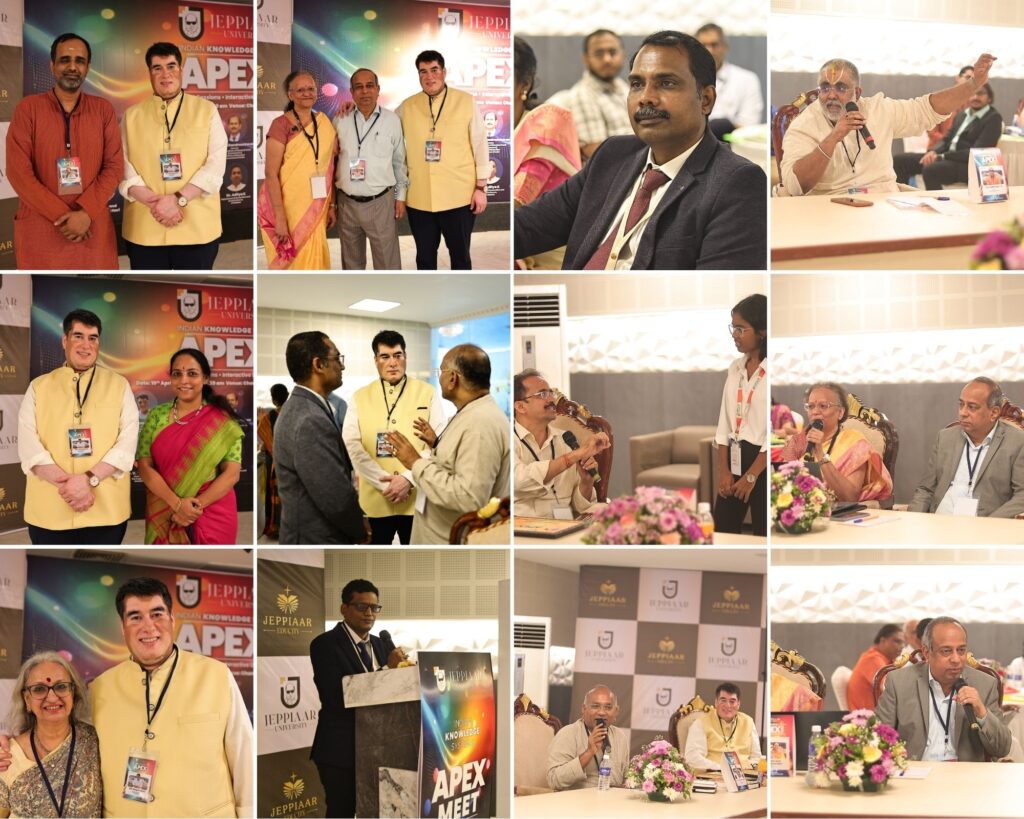
What We Covered
The morning ranged across authentic research methods, textual studies, Ayurveda, embodied practice, foundational research, classical Tamil and other classical language traditions such as Kannada, Telugu, Odiya etc, Indian mathematics and astronomy, patents and Traditional Knowledge protection, integrative science textbooks, pedagogical models for IKS revival, technology-driven curriculum delivery, innovation and entrepreneurship through IKS, and on-the-ground implementation case studies.
The lightning policy round at the close of the morning surfaced concrete directions on pedagogy, textbooks, mother-tongue instruction, teacher training, degree programs, recognition of prior learning, AI-driven delivery, patent literacy, yoga, industry alignment, Centres of Excellence, and cross-disciplinary integration. Each will deserve its own deeper conversation in the months to come; for now, we have a working map.
The Real Experiment
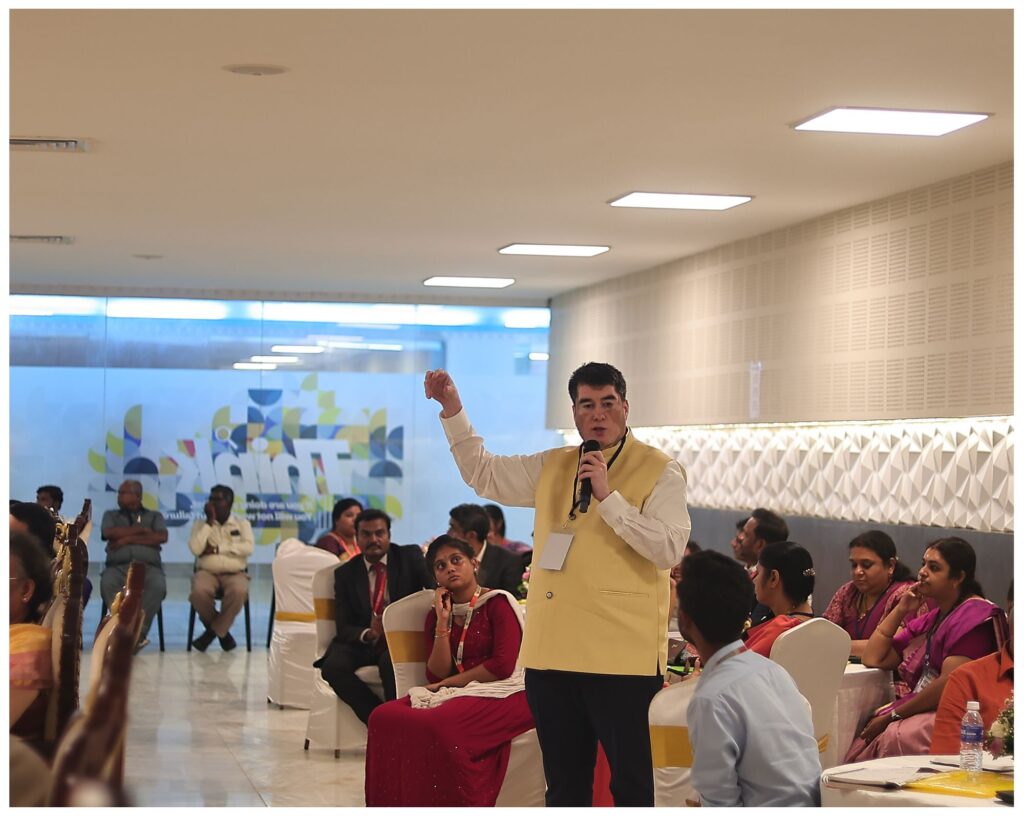
What made the day distinctive was the curation. The morning belonged to the panel — a structured, moderated discussion that surfaced perspectives from research, pedagogy, technology, government, entrepreneurship, classical literature, and contemplative practice. The afternoon belonged to the room.
This is what I want to report carefully. Getting every concerned IKS stakeholder in India into a single hall — students, parents, teachers, school and university administrators, educators, education enthusiasts, scholars, and IKS intellectuals — and then giving them a structured, moderated forum to react to the panel, contribute from their own ground, brainstorm solutions, hear perspectives from sides they had not previously considered, and probe with follow-up: this was the real experiment of the day.
It worked. The format held. Every voice that wanted to be heard was heard. Disagreements landed without rancour. Concerns from one stakeholder group were answered with substance by another. Everyone in that room walked out richer — in insights, in understanding, in possible directions for action.
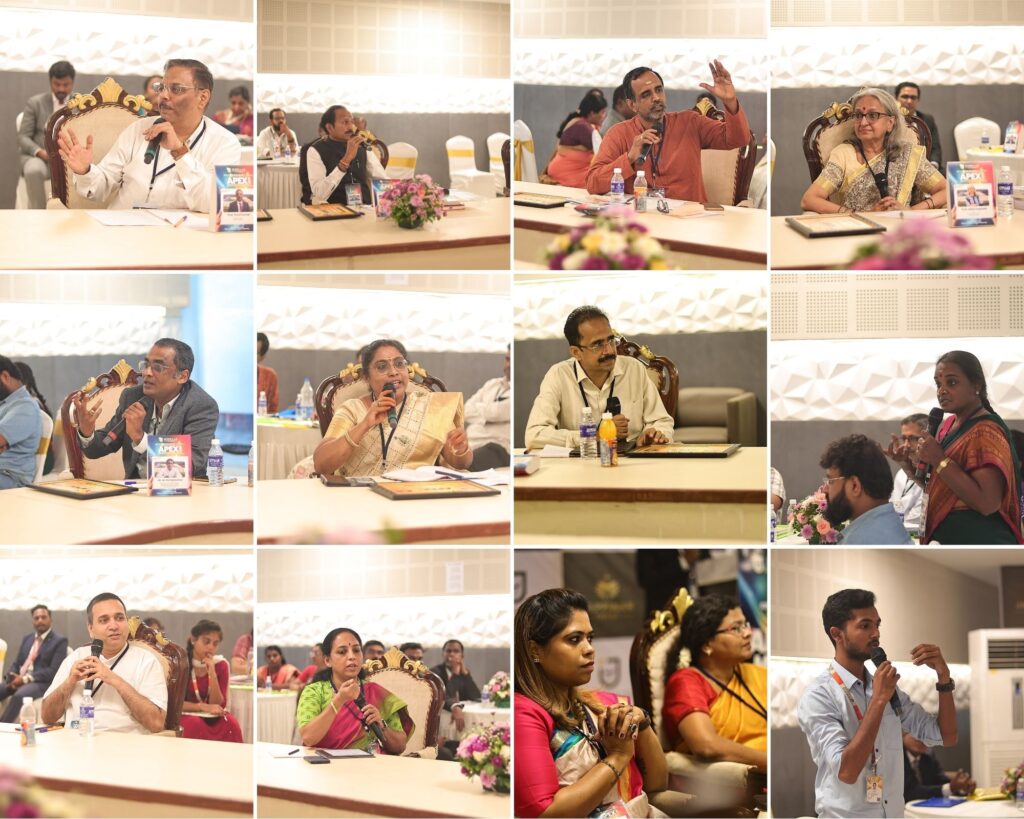
What the Students Brought
The students surprised us all. They listened with an attention rare in any room, and their questions often cut sharper than the panel’s own framings. Several of their statements drew genuine delight from the panelists; some caught us unprepared.
They told us, with disarming honesty, that the obstacle to IKS revival is not their generation. They understand why this matters. The block, they said, lies upstream — with parents who, focused on survival and a good salary, still ask first what something will earn before asking what it will make of their child. Schools, treating parents as customers, end up amplifying the same question. Most parents remain unaware of the IKS revival underway, of why it matters to their children’s future, and of why it matters to the country’s economic and civilisational sovereignty. They are not malicious. They are anxious — and uninformed, in the morally neutral sense, of what is being attempted.
This shifts where the next phase of work has to happen. Engaging students alone will not move the needle. The parents have to come into the conversation — directly, substantively, on their own terms.
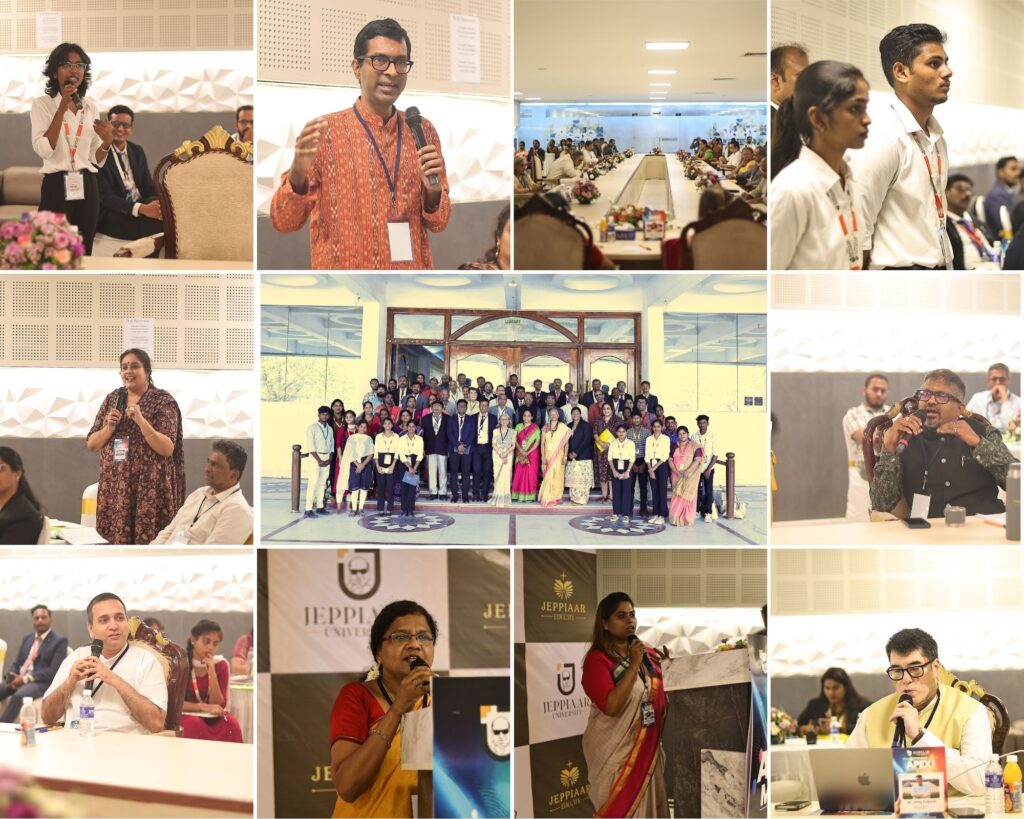
What the Parents Brought
The parents in the room told a different story from the one their children had described at home. Once invited in, they came alive — and they brought concerns the panel could not have generated on its own.
Questions about the erosion of folk and forest-dwelling knowledge systems, and how these are being protected and documented before they vanish. Questions about the medium of instruction — the spectrum that lives between mother-tongue education and source-text Sanskrit study. Questions about whether IKS should be a separate discipline at all, or simply woven into existing subjects in the everyday classroom hour. Questions about whether IKS first needs to establish itself through industry, products, startups, and visible success stories before it can become a viable career path. Questions about how to sustain children’s wellbeing in an education system that increasingly treats them as throughput.
What struck me most was the quality of parental participation. These were not customers asking what they would get for their fees. These were citizens — anxious, yes, but engaged, curious, willing to be persuaded. The instinct to dismiss the modern Indian parent as merely commercial is, I now think, lazy. Given a substantive forum and substantive answers, they are extraordinary co-thinkers.
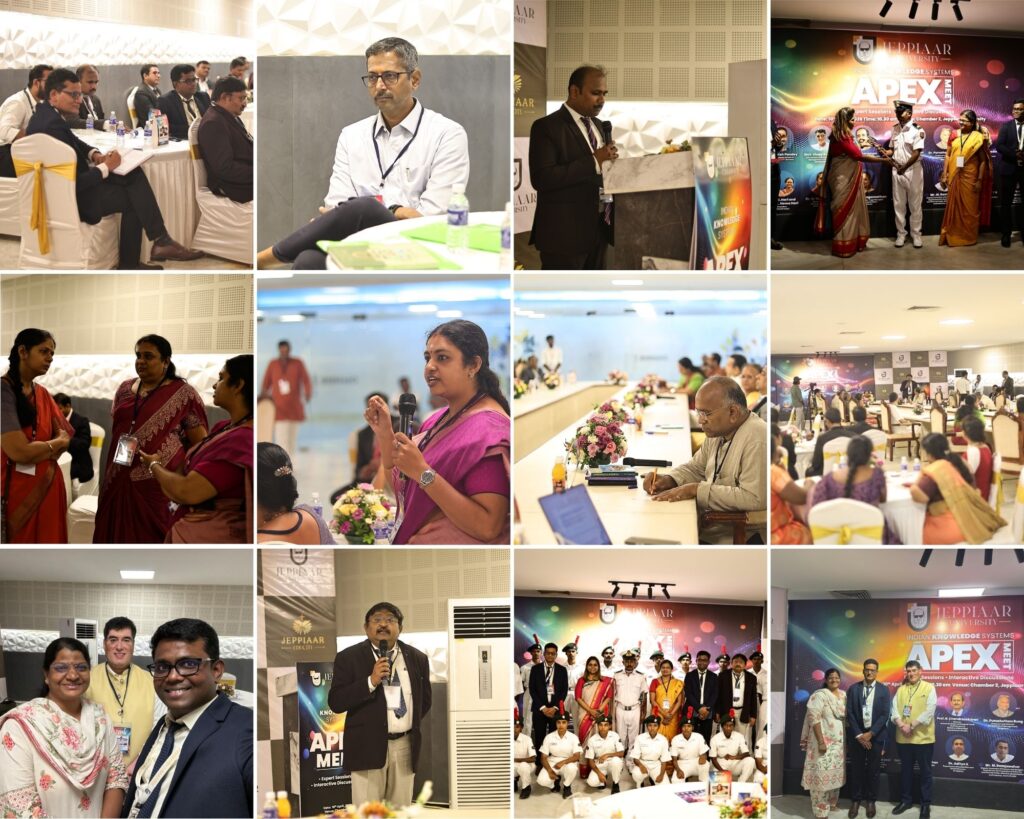
What Stayed With Me Most
The instinct that IKS belongs only to specialists is dissolving. Folk knowledge from forest-dwelling communities, midwifery wisdom carried by our grandmothers, AI-driven curriculum delivery, integrative physics textbooks, classical maritime history of Tamil Nadu, Odisha, Karnataka etc, Ayurvedic chronobiology, patent law for traditional knowledge — all sat at one table, and none had to apologise to any of the others. That, more than any single recommendation, is what I will carry from this gathering.
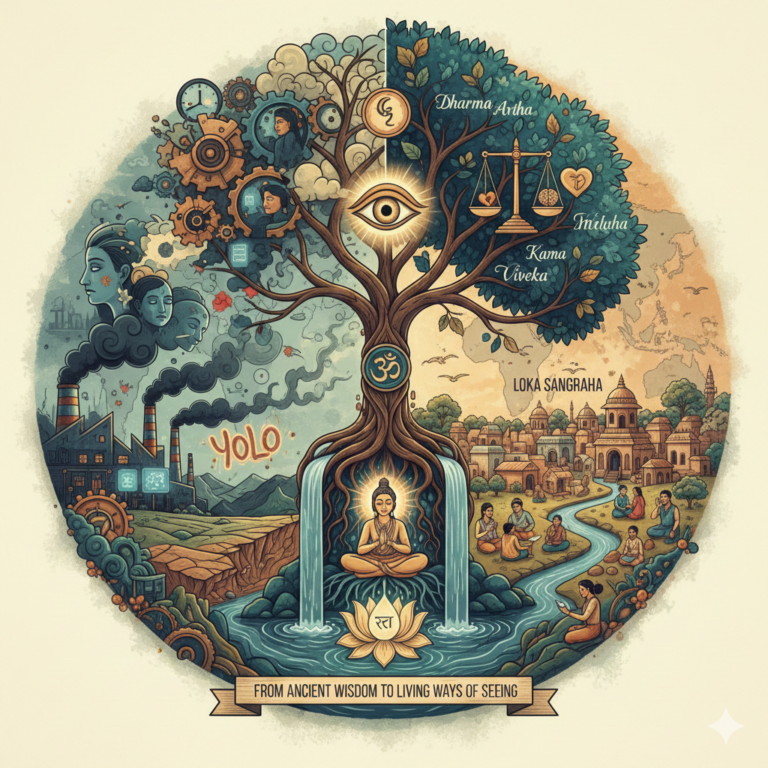
And the structural insight an audience member articulated near the end has stayed with me since: that IKS is currently being inserted as a subject inside an environment designed around non-IKS principles. The question is not only whether to add IKS as a credit. The question is whether the soil itself can be transformed.
What Comes Next
Roughly a hundred new ideas surfaced from the day — some from the panel, many more from the floor. We will be working through them in the weeks and months ahead, picking up the most promising threads, prototyping, testing, refining. Some will become initiatives. Some will become partnerships. Some will become the next conversations. And of course there will be effort at the policy level.
Heartfelt Thanks
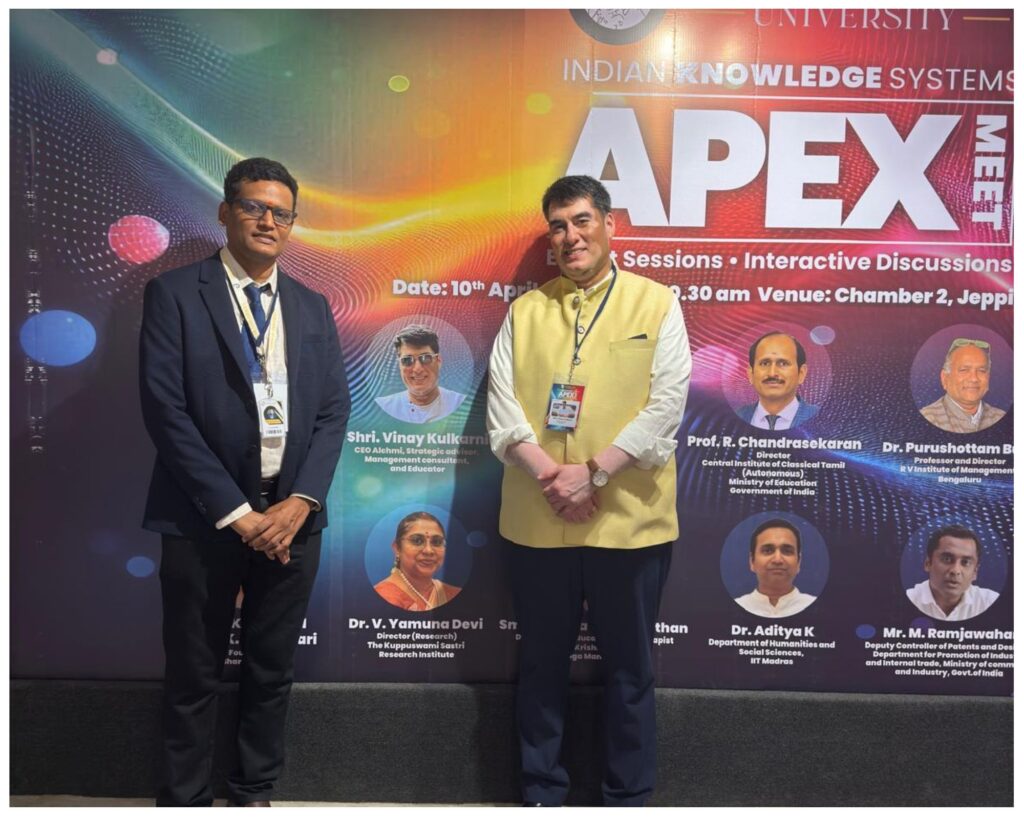
To everyone who came, listened, asked, contributed, and stayed to engage — my deepest thanks, from the bottom of my heart to Dr. Regeena J. Murali, Founder and Chancellor of Jeppiaar University; Dr. Shaleesha A. Stanley, Pro-Chancellor; Dr. R. Baskaran, Vice Chancellor; Dr. Kishore Sonti, Pro-VC, Dr. S. K. Binu Siva Singh, Registrar and to my fellow panelists, for the depth, generosity, and discipline you brought to the table. To the students whose questions reshaped the day. To the parents who came alive once given the floor. To the teachers, administrators, educators, IKS intellectuals, and education enthusiasts whose ground-level perspectives anchored every discussion.
This day belonged to all of you. Your words and your attention are inside the work that is to follow. The end result of any such deep deliberation should be to change mental models – without that no true learning takes place. I was happy to note we definitely experienced that kind of learning as a group and a productive opening of minds. I am looking forward to future conversations and a truly transformed Bharat!