
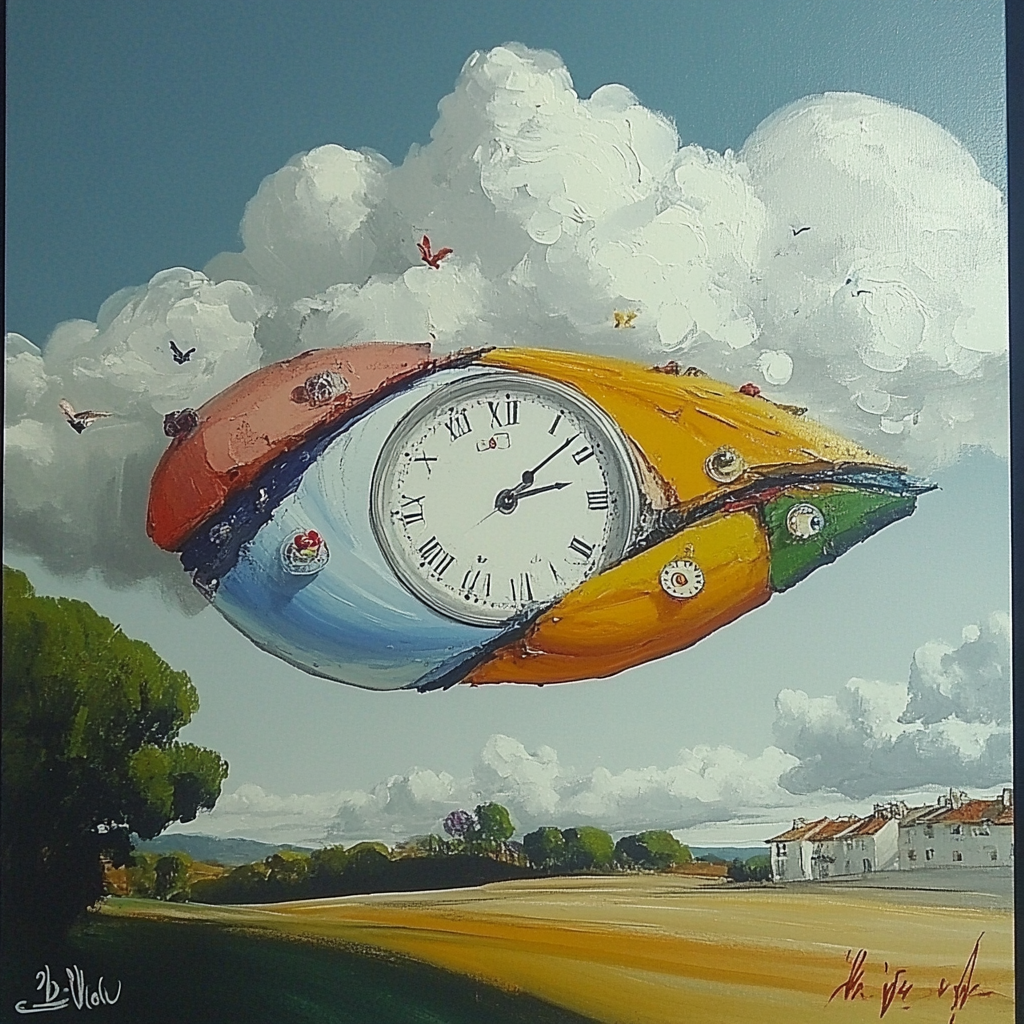
Time and Tide Wait for None!
Make time your best friend!
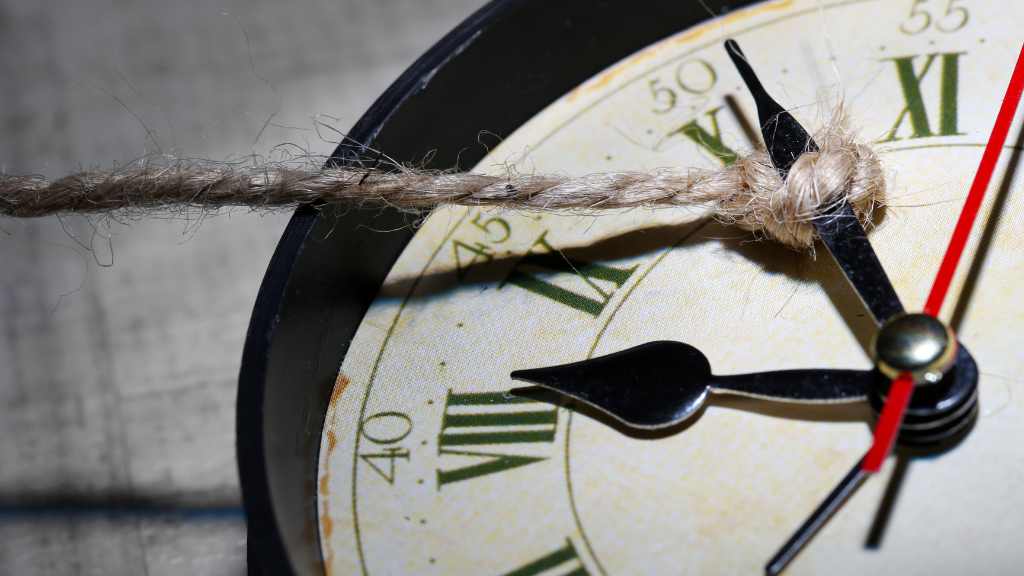
Time and tide wait for none! This is an old proverb. It is essentially saying that time keeps flowing and never stops. The seconds, minutes, hours, days, weeks, months, years – all flow ceaselessly! And so we bid goodbye to 2024 and welcome 2025! We are on the cusp of this change and so it is a good time to learn more about time itself!
Bhagwan Krishna declared in the Bhagwad Gita: “कालः स्मि लोकानां संहारकः” which translates to “I am Time, the destroyer of worlds.” In India, we have always seen Time as a powerful force that brings about change and destruction, and is often personified as a deity. Shiva is worshipped as “Mahakaal” in Ujjain.
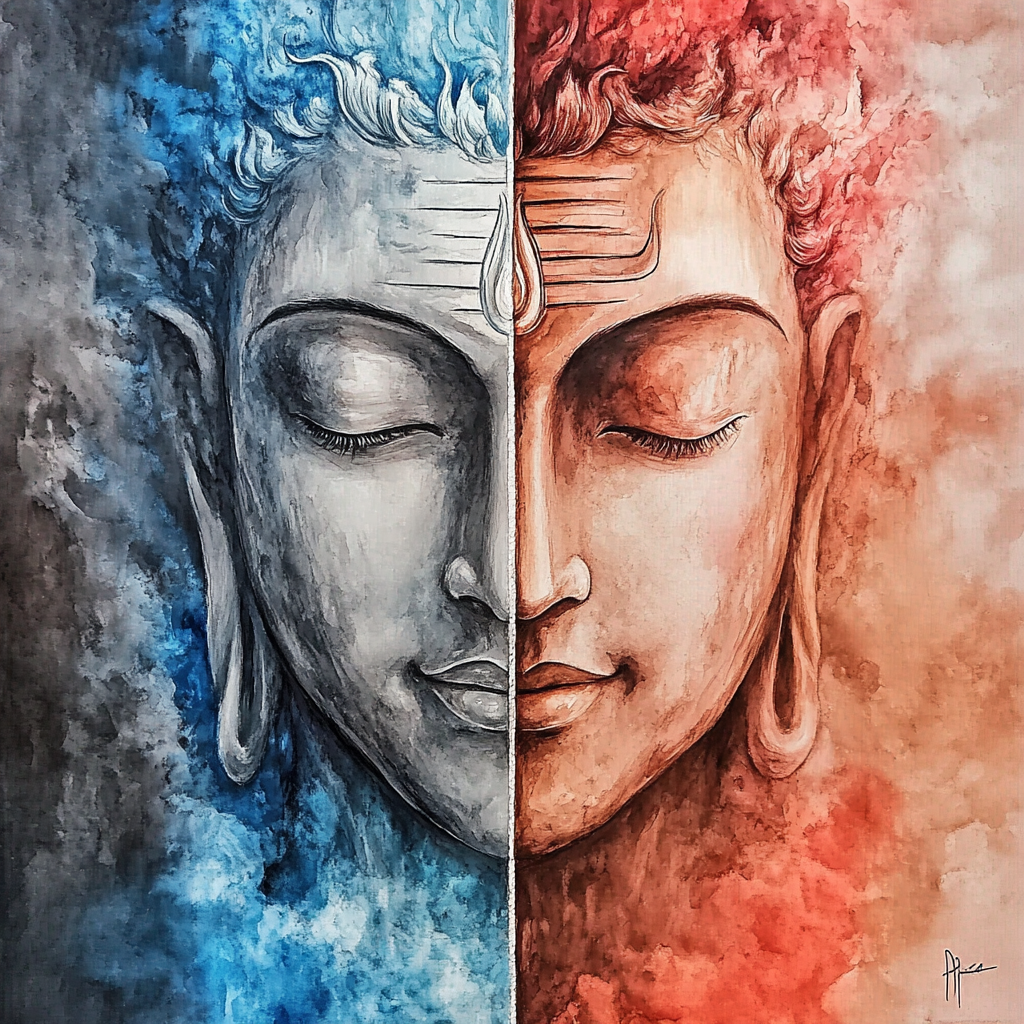
“कालः पचति भूतानि, कालः संहरते प्रजाः” –”Time consumes all beings, Time destroys all people” and “कालो हि दुरतिक्रमः” – “Time is difficult to overcome” are two other thoughts on time from India.
Yet, I venture to say we can make time our best friend as well. Because it is in the combined field of time and space that we have to spend our lives, do our good work and leave when the “time is up!”
“Kala”, signifies “time” in its broadest sense. It encompasses the microcosmic and macrocosmic dimensions of existence and is intricately tied to the cyclic nature of creation, preservation, and dissolution in the universe. Ancient Indian texts, including the Vedas, Upanishads, Puranas, and Vedanga Jyotisha, offer profound insights into the concept of time, its measurement, and its philosophical significance.
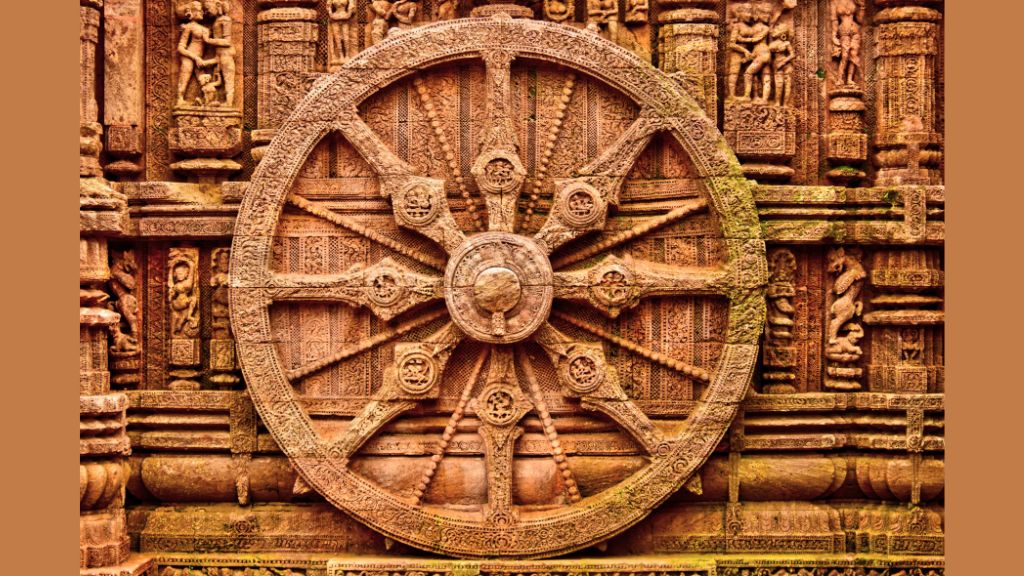
Time, often represented as a wheel (Kala Chakra), signifies the cyclical processes of the universe. The Surya’s Chariot at the Konark Sun Temple in Odisha is a symbolic architectural representation of this eternal cycle. Kala is depicted as both kshayakari (exhausting) and vriddhikārī (flourishing), symbolizing the universe’s inevitable ebb and flow.
The Infinite Flow of Time: A Journey Across Cultures, Sciences, and Philosophy
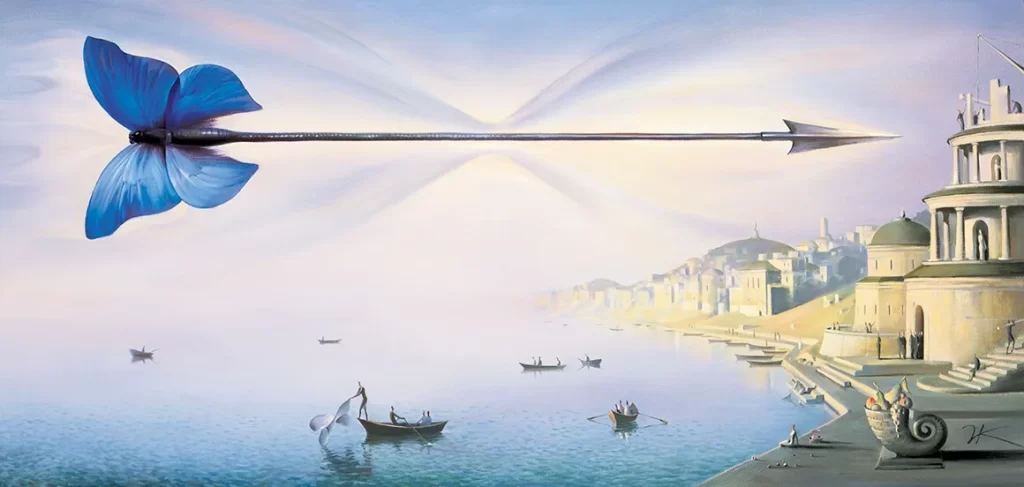
Tonight, as the clock strikes midnight, we welcome 2025 with joy and celebration. But isn’t it interesting that in celebrating the new year, we are also acknowledging the passing, or rather the “death,” of 2024? This moment, where creation and dissolution walk hand in hand, reflects the essence of time itself. It is fleeting yet eternal, linear yet cyclical, and deeply rooted in our lives, cultures, and philosophies. Image: Arrow of time by Vladimir Kush.
Let us explore the concept of time through the eyes of different cultures, ancient wisdom, and modern science. Along the way, we’ll weave these ideas into a narrative that is as rich and profound as time itself.
Circadian Rhythms, Rta, and Their Relationship to Time, Satya, and Dharma
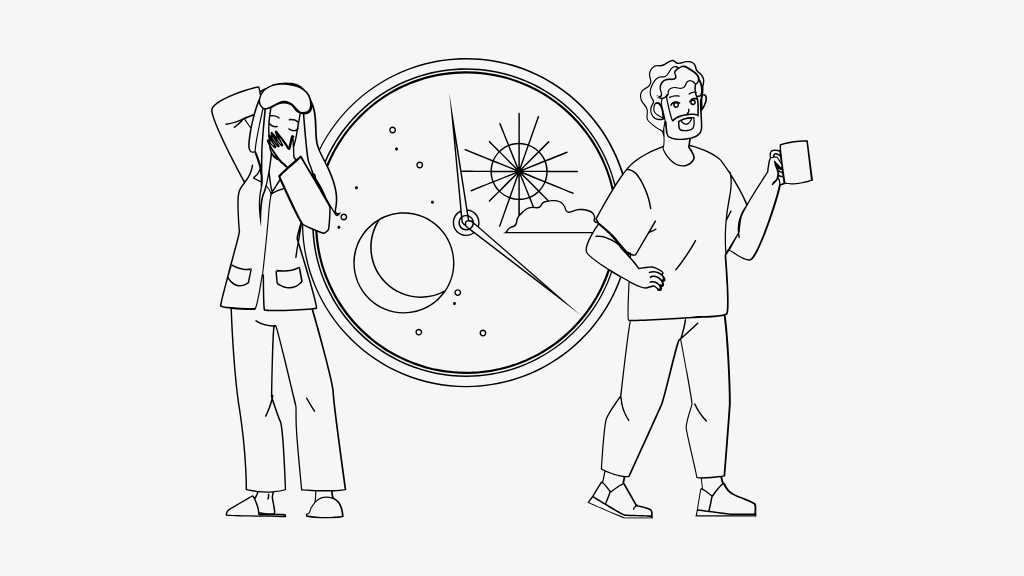
Circadian rhythms are natural, internal processes that regulate the sleep-wake cycle and other physiological activities, repeating approximately every 24 hours. Governed by the “biological clock,” they synchronize with environmental cues like light and temperature, influencing health, behavior, and well-being.
The Concept of Rta:
In ancient Vedic philosophy, Rta (pronounced rita) is the cosmic order that governs the universe, encompassing cycles of time, nature, and human existence. It reflects the inherent harmony and interdependence of all entities.
Rta governs the orderly progression of time, marked by:
• Daily Cycles: Day and night.
• Seasons: Transition through the six Indian seasons (ritus).
• Eras (Yugas): Larger cycles of time reflecting cosmic evolution.
• Rta and Natural Cycles: Rta dictates the movement of celestial bodies, the changing seasons, and life cycles in nature. Adherence to Rta ensures balance, while deviation causes chaos and disharmony.
The various festivals and cyclical rituals practiced in India are also aligned with natural cosmic cycles. For instance during the 9 days of “Navaratri”, the night of “Holi” and during “Deepavali” there is a natural upsurge of energy which is extremely conducive for “Sadhana” or meditation practiced for spiritual growth. These are just 3 examples. The Indian festival calendar is essentially a calendar of days marked for spiritual practices but due to many hundred years of colonization, these festivals have become more of a cultural phenomenon.
The Relationship Between Rta, Satya, and Dharma:
1. Rta as the Foundation: Rta is the fundamental cosmic principle that sustains existence. It is the bedrock of natural law and order.
2. Satya (Truth) Emerges from Rta: Satya (truth) is the expression of Rta in human thought and speech. Aligning with Satya means living in harmony with Rta, recognizing universal truths beyond subjective realities.
3. Dharma (Righteousness) as a Manifestation of Rta: Dharma arises from Rta as the ethical and moral framework that guides human actions. It represents the principles of righteousness, justice, and duty, ensuring that individual and societal behaviors uphold the cosmic order.
Thus, Rta governs the universal order (macrocosm), while Satya is the recognition and manifestation of the Rta and adherence to Rta in thought and speech. Dharma translates this recognition into action, ensuring harmony in the microcosm of human life.
Ayurveda and Rta: Harmony with the Cosmos
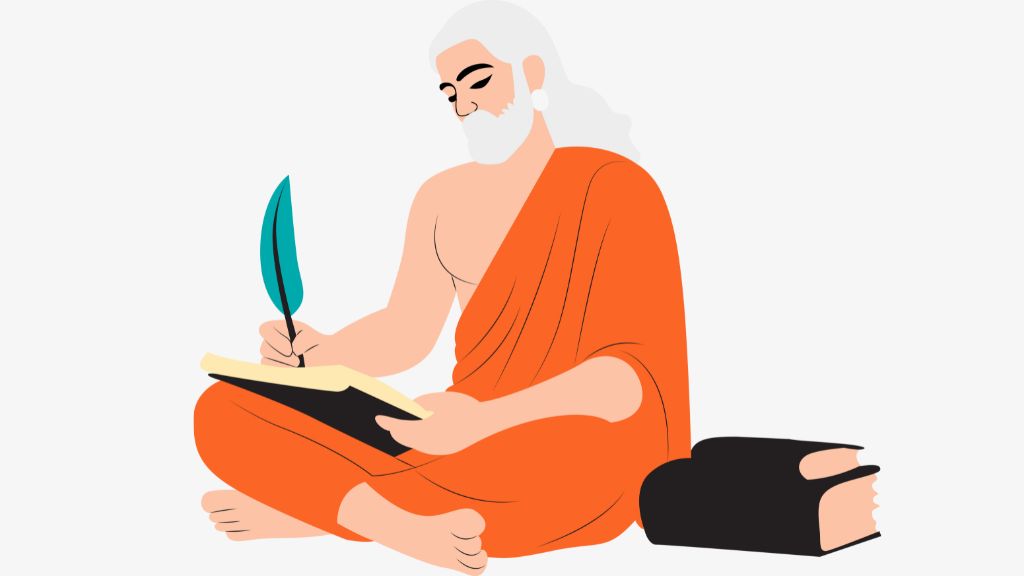
Ayurveda being a upaveda, is rooted in Vedic thought and aligns closely with Rta, emphasizing living in harmony with natural cycles to maintain health:
- Dinacharya (Daily Routines): Align activities like eating, sleeping, and exercise with daily cycles dominated by Kapha, Pitta, and Vata doshas.
- Ritucharya (Seasonal Routines): Adapt diet and lifestyle to seasonal changes to maintain balance.
- Agni (Digestive Fire): Encourages eating during peak Pitta times (midday) for optimal digestion, resonating with natural rhythms.
By aligning with Rta, Ayurveda fosters a balance between the individual (microcosm) and the universe (macrocosm), echoing the Vedic emphasis on harmony.
Modern Science Meets Ancient Science and Vedic Knowledge:
The 2017 Nobel Prize in Physiology or Medicine recognized the molecular mechanisms governing circadian rhythms, affirming the importance of aligning biological clocks with natural cycles for health. These discoveries resonate with the Vedic understanding of Rta, demonstrating how modern science validates ancient science (I desist from calling it ancient wisdom – it is science and also wisdom. There is no dichotomy there).
Examples of Cycles and Their Connection to Rta, Satya, and Dharma
Examples of Cycles in Nature and Life
1. Sleep-Wake Cycle:
- Governed by circadian rhythms, this cycle ensures physical and mental rejuvenation. Adhering to this natural rhythm promotes health and well-being, while disruptions lead to disorders.
2. Water Cycle (Hydrological Cycle):
- Water evaporates, forms clouds, condenses, and returns to Earth as rain. This cycle is a clear manifestation of Rta, the natural order that maintains the planet’s ecological balance.
3. Cycle of Ingestion, Digestion, and Excretion:
- Food is consumed, processed into energy, and waste is excreted. This biological cycle sustains life and reflects harmony when properly maintained, as advocated in Ayurveda through mindful eating and routine.
4. Life and Death Cycle:
- Life arises, evolves, and eventually ends, only to give way to new life. This fundamental cycle is governed by Rta, symbolizing transformation and renewal.
5. Seasonal Cycles:
- The transition through spring, summer, monsoon, autumn, and winter ensures agricultural and ecological stability, guiding human activities like farming and seasonal practices in Ayurveda (Ritucharya).
6. Lunar Cycle:
- The phases of the moon affect tides, planting cycles, and even human emotions, illustrating the interconnectedness of celestial and earthly rhythms.
Scientific Cycles as Rta
Otto Cycle in an Internal Combustion Engine: The Otto Cycle describes the thermodynamic processes in a gasoline-powered internal combustion engine, consisting of:
- Intake Stroke: Air-fuel mixture enters the cylinder.
- Compression Stroke: The mixture is compressed.
- Power Stroke: Combustion releases energy, driving the piston.
- Exhaust Stroke: Burnt gases are expelled.
This cycle represents the Rta (governing principle) of an engine. When the Otto Cycle operates without disruption, the engine functions efficiently.
Dharma of the Car Owner in Maintaining Rta
1. Adhering to the Dharma of Maintenance:
- The car owner’s dharma is to respect the Rta of the engine by ensuring regular servicing, timely oil changes, and addressing wear and tear.
- Just as human health requires alignment with natural cycles, an engine’s health requires alignment with its operational principles (Rta). Ignoring these leads to breakdowns, analogous to disrupting natural cycles in life.
2. Examples of Dharma in Action:
- Regular oil changes reduce friction and overheating, ensuring the smooth continuation of the Otto Cycle.
- Replacing worn-out parts (like spark plugs or air filters) prevents inefficiencies that disrupt the engine’s Rta.
- Timely servicing ensures that the engine remains aligned with its designed operational rhythm.
Philosophical Integration
1. Rta (Cosmic Order):
- The cycles, whether biological (sleep-wake, digestion), ecological (water cycle, seasons), or mechanical (Otto Cycle), are governed by universal laws or principles (Rta).
2. Satya (Truth):
- Recognizing and accepting these cycles as truths helps maintain harmony and balance.
3. Dharma (Action):
- Fulfilling responsibilities aligned with these cycles, such as maintaining personal health, caring for nature, or servicing a car, ensures the smooth continuation of Rta.
Thus, in my view, time is a kind of thread that ties our lives, our role in the universe and our actions in life to the universal governing principles of the universe through dharma.
Cycles, Samskaras, and the Eternal Nature of Time: The Rhythms of Nature
Time isn’t just a human construct. It is deeply embedded in nature:
- Biological Cycles: Our sleep-wake patterns, digestion, and reproductive cycles mirror time’s rhythm.
- Natural Cycles: The water cycle, seasons, and even planetary orbits reflect time’s eternal flow.
The 16 Samskaras: Rituals Marking the Passage of Time
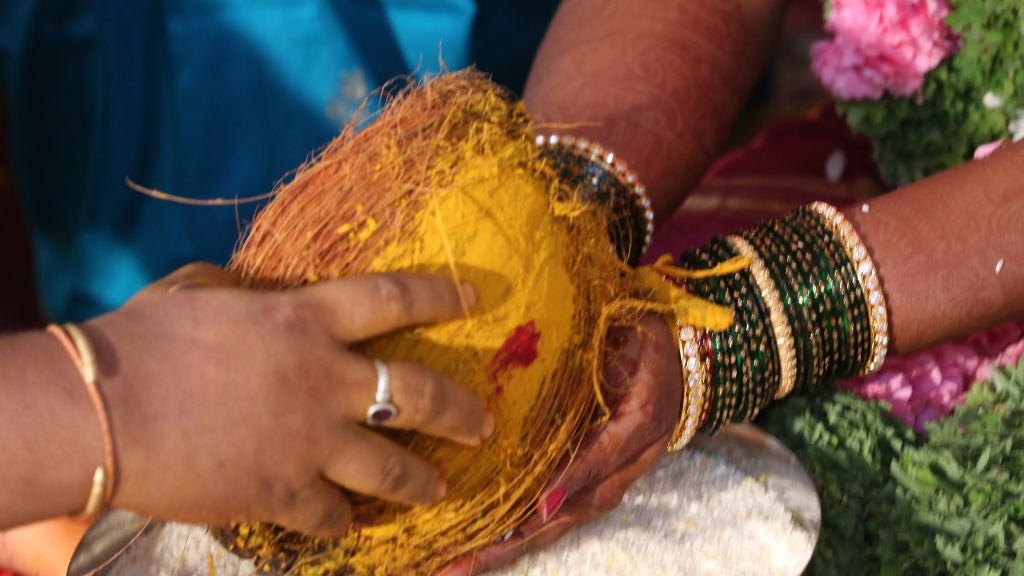
In Sanatana Dharma, Samskaras are sacraments or rites of passage that mark key milestones in an individual’s life. These rituals are rooted in Rta, reflecting the natural progression of life and time.
1.Garbhadhana (Conception): A ritual to invite the soul into the womb, performed before conception. It emphasizes the sanctity of creating life.
2.Pumsavana (Fetal Rite): Performed in the third month of pregnancy, seeking the well-being of the fetus.
3.Simantonnayana (Baby Shower): Conducted in the later stages of pregnancy, this ritual ensures the mental and physical health of the mother and unborn child.
4.Jatakarma (Birth Ceremony): Performed immediately after birth, it welcomes the newborn and celebrates life’s beginning.
5.Namakarana (Naming Ceremony): Held on the 10th or 12th day after birth, the baby is given a name in alignment with astrological principles.
6.Nishkramana (First Outing): The child is taken outside for the first time to experience sunlight and fresh air, symbolizing growth and exposure to the world.
7.Annaprashana (First Feeding of Solid Food): Performed at six months, introducing solid food to the child, marking another step in growth.
8.Chudakarana (First Haircut): The child’s first haircut is performed as a purification ritual.
9.Karnavedha (Ear Piercing): Piercing of the child’s ears, symbolizing cultural adornment and well-being.
10.Vidyarambha (Commencement of Education): Initiates formal learning, reflecting the importance of knowledge in one’s life.
11.Upanayana (Sacred Thread Ceremony): Marks the beginning of formal Vedic education, where the child is introduced to their spiritual duties.
12.Vedarambha (Start of Vedic Studies): Deepens one’s learning of the Vedas and scriptures.
13.Keshanta (First Shaving): Performed at puberty, marking the transition into adulthood.
14.Samavartana (Graduation Ceremony): Concludes formal education, symbolizing readiness for worldly responsibilities.
15.Vivaha (Marriage): A major samskara that unites two individuals in sacred matrimony, marking the start of a new phase of life.
16.Antyeshti (Final Rites): The final samskara, performed after death, ensures the soul’s journey continues according to Rta.
Samskaras and the Passage of Time: These Samskaras are deeply intertwined with the cycles of time and Life Stages, from conception to death, the Samskaras mirror the natural progression of life. Many rituals are tied to auspicious times or cosmic cycles, ensuring alignment with the universal order (Rta). These rites connect past, present, and future generations, preserving the eternal flow of dharma.
Now, our ancestors have built very elaborate conceptions of time that also help us to follow these 16 samskaras at the appropriate points in time. Let us dig in.
Macrocosmic Time:
Creation (Sristi) and Dissolution (Laya): Kala governs the cyclic processes of the cosmos, from creation (srishti) to destruction (kshaya). These cycles occur over immense periods, including the Kalpa (day of Brahma) and Chaturyugas (four epochs).
Yuga System: The cycle comprises Krita, Treta, Dvapara, and Kali Yugas, with durations proportioned as 4:3:2:1. The current epoch is Kali Yuga, which began in 3102 BCE. Of course, like all things these are intensely debated and I am no expert. I am sharing what I have read. So, please pardon any errors. Please refer to Dharma Wiki or Hindupedia for greater detail.
Kalpa and Manvantara: A Kalpa constitutes 14 Manvantaras, each ruled by a Manu, representing a phase in cosmic evolution.
Microcosmic Time:
Vedanga Jyotisha and Surya Siddhanta describe intricate units of time, from the immeasurable Truti to the measurable Muhurtas and beyond. These systems were integral for calendrical precision and ritual practices.
Philosophical and Spiritual Perspectives:
The Cosmic Play of Brahman: According to the Upanishads and Puranas, the universe is a manifestation of Brahman, unfolding and contracting in cycles governed by Kala. Creation and dissolution are not external acts but Brahman’s intrinsic expressions.
Kala and Dharma: Each Yuga reflects a progressive decline in Dharma (acting in accordance with cosmic order), with Krita Yuga being the age of perfection and Kali Yuga marked by moral decline. Aisa hum mante hain (this is how time is viewed in our tradition).
Kala in Measurement and Astronomy: Indian astronomers developed precise methods for time measurement using instruments like the Ghati Yantra and calculations from texts like the Siddhantas.
Key divisions include:
• Human Time: Days, months (masa), and years (samvatsara).
• Divine Time: 360 human years equal one divine year (Divya Varsha).
• Cosmic Time: One day of Brahma equals 1,000 Chaturyugas, encompassing 4.32 billion human years.
Cultural and Psychological Impact:
Kala and Chitta (Psyche): The cyclical perception of time is deeply embedded in the Indian worldview, influencing cultural practices, rituals, and philosophical outlook.
Astrological Significance: Time divisions, such as tithis, nakshatras, and planetary transits, form the basis for astrology and Panchanga (traditional Hindu calendar).
Kala is more than a measure of temporal progression; it is a foundational principle of cosmic order and spiritual evolution. Its representation as cyclic, yet inexorable, underpins the Indian understanding of the universe as an eternal rhythm of creation and dissolution. Time, as described in Indian tradition, bridges the finite and infinite, serving as a reminder of the interconnectedness of existence and the divine play of Brahman.

As an example, in Kashi (Varanasi), the sacred city, the cyclical and eternal nature of time is profoundly felt, for example at the Harischandra and Manikarnika ghats where funeral pyres burn without interruption, symbolizing the eternal cycle of life, death, and rebirth. These ghats are like the transition stations from life to death, where death is not an end but a transition.
Applications in Business and Society
Global businesses must navigate differing time philosophies, balancing punctuality with relational or cyclical considerations. Time interpretation influences societal values, productivity metrics, and interpersonal dynamics. The use of time reflects deeper cultural philosophies, from individualism and material success to collective harmony and spiritual alignment. I am afraid we have not spent time studying our own ideas of time in India and with the wholesale adoption of modern technology, education and urbanization we have also imported the model of time. The Panchanga which is a great tool handed down to us from the past ages has been more or less relegated to the realm of religion and culture. I am exploring how we can utilize this tool in other areas such as business and commerce.
Calendars and time
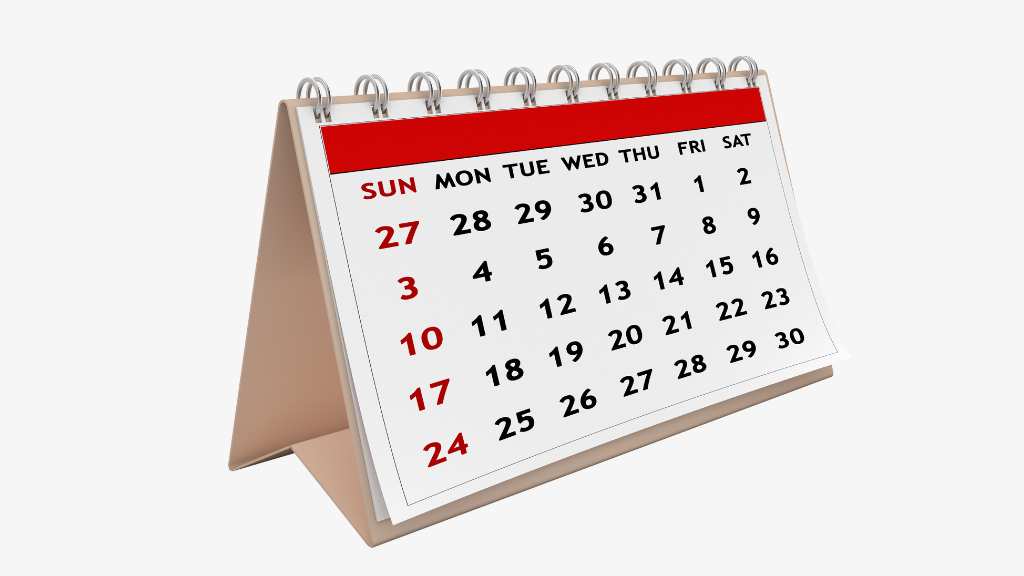
That brings us to the topic of calendars – the most common tool used to measure and keep track of time. Being the oldest living great civilization, obviously we have our own calendaring system which we have again abandoned and replaced with the Gregorian calendar since the whole world uses that. In general all things Indic start with observing and understanding the cycles of nature and building tools that help us align our activities to the natural surge and fall of energies
We have not yet understood the pros and cons of that decision just as we have not woken up to the disastrous impact of the (i) “Green Revolution” which replaced traditional methods of agriculture with modern methods involving the use of chemical fertilizers and pesticides, and (ii) the “While revolution” which replaced our indigenous cow breeds with imported breeds such as “Jerseys” and “Holstein Friesens.” Only “time” will tell!
The Gregorian Calendar and the Hindu Calendar represent two distinct approaches to measuring and conceptualizing time, rooted in different cultural, religious, and scientific traditions.
Below is an overview and comparison of the two systems:
The Gregorian Calendar was introduced by Pope Gregory XIII in 1582 as a reform of the Julian calendar. This is a purely solar calendar based on the Earth’s revolution around the Sun and divides the year into 12 months with fixed lengths, totalling 365 days, and includes a leap year every four years to account for the extra 0.2422 days in the solar year. The Gregorian Calendar is closely tied to the solar year, ensuring consistency with the seasons but the months do not correspond to lunar phases, leading to no direct relationship between the calendar and moon cycles. The Gregorian Calendar is predominantly used for civil purposes worldwide and to track major holidays (e.g., Christmas, Easter) which are tied to Christian traditions, though Easter’s date depends on the lunar calendar.
The Hindu Calendar on the other hand is a lunisolar calendar that incorporates both the moon’s phases and the Sun’s movement through the zodiac and includes multiple regional variations and is used primarily for religious and cultural purposes in India. It divides the year into 12 lunar months, each beginning with a new moon, and synchronizes with the solar year by adding an intercalary month (Adhika Masa) approximately every three years.
The Hindu Calendar on the other hand is based on both lunar and solar movements, making it more complex. Lunar months align with moon phases, while solar transits define Rashi (zodiac signs), used for astrological purposes.
The Hindu Calendar is primarily used for Hindu festivals, rituals, and auspicious occasions. It determines important events such as Diwali (based on lunar months) and Makar Sankranti (based on solar transits). It is also used for Panchanga (Hindu almanac), which provides detailed astrological data for daily life.
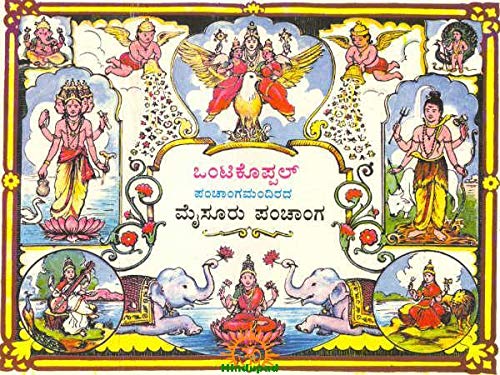
The Panchanga, as mentioned before, is a traditional Hindu almanac that serves as a comprehensive tool for understanding time and its spiritual, astrological, and practical applications. The term “Panchanga” is derived from two Sanskrit words: Pancha (five) and Anga (limbs or parts), indicating that it consists of five primary components. It is primarily used in Vedic astrology, daily rituals, auspicious event planning, and agricultural activities.
Five Angas (Parts) of Panchanga
1. Tithi (Lunar Day):
- Represents the angular distance between the Sun and the Moon.
- There are 30 tithis in a lunar month, categorized into two phases: Shukla Paksha (waxing moon) and Krishna Paksha (waning moon).
- Determines auspiciousness for activities like marriages, religious rituals, and fasting.
2. Vara (Day of the Week):
- Corresponds to the seven days of the week (Sunday to Saturday), each associated with a planetary deity (e.g., Sunday with the Sun, Monday with the Moon).
- Importance: Helps in choosing favorable days for specific activities based on planetary rulership.
3. Nakshatra (Lunar Constellation):
- The Moon’s position in one of the 27 Nakshatras (lunar mansions) determines the Nakshatra of the day.
- Importance: Used to calculate auspicious timings (muhurthas), and it has a significant role in birth charts (janma kundali).
4. Yoga (Planetary Combination):
- A calculation based on the combined longitudes of the Sun and the Moon, resulting in 27 yogas.
- Importance: Indicates favorable or unfavorable influences for various activities.
5. Karana (Half-Tithi):
- Half of a tithi; there are 11 types of Karanas, out of which four are fixed (Sthira) and seven are movable (Chara).
- Importance: Determines the quality and energy of specific time periods.
Types of Panchanga
1. Drik Panchanga (Astronomical):
- Based on precise astronomical calculations of planetary positions.
- Commonly used for astrological readings and religious ceremonies.
2. Vakya Panchanga (Traditional):
- Uses pre-calculated formulas and traditional tables for predictions.
- Less accurate compared to the Drik Panchanga.
3. Regional Variants:
- Different regions in India have their own versions of Panchanga, e.g., Tamil Panchangam, Telugu Panchangam, Kannada Panchangam, etc.
- These versions are tailored to local traditions and festivals.
4. Online Panchangas:
- Modern adaptations available on websites and apps, offering easy access to calculations and auspicious timings.
Uses of Panchanga
1. Astrology:
- Essential for casting birth charts (janma kundali), predicting events, and understanding planetary influences.
2. Rituals and Festivals:
- Determines auspicious timings (muhurthas) for weddings, housewarming ceremonies, and religious observances.
- Aligns festivals with specific tithis and nakshatras (e.g., Diwali, Navaratri).
3. Daily Planning:
- Used for identifying the most favorable days and time windows for travel, business, or starting new ventures.
4. Agriculture:
- Guides farmers in choosing the best timings for sowing, harvesting, and other agricultural activities based on celestial influences.
5. Spiritual Practice:
- Helps practitioners align their meditations, prayers, and fasts with cosmic rhythms.
The Panchanga is an ancient tool that integrates astronomy, astrology, and cultural wisdom, reflecting the profound Vedic understanding of time as a divine and cyclical phenomenon. Its use transcends daily life, impacting spiritual, social, and ecological practices in profound ways.
Key Ideas and Cultural Comparisons on Time Interpretation
Western Linear-Active Time
In the USA, time is viewed as a tool; linear and segmented into units like hours, days, and years. Culturally, time is money as it is an economically driven culture. Punctuality and efficiency are critical. In Switzerland and Germany, precision in time management is cultural, mirrored in industries like watchmaking and transportation. In Britain and Anglo-Saxon Cultures time is linear and monochronic and hence people prioritize single tasks and complete within scheduled frameworks. So in general there is an emphasis on strict adherence to schedules and productivity is equated with success.
Southern European Multi-Active Time
In this case, time is subjective and event/personality-related. In Italy and Spain they exercise flexibility with schedules and human interactions and relationships take precedence over punctuality. In Arab Cultures, conversations and personal connections dominate time use, often disregarding clock constraints.
Eastern Cyclic Time
In the great East, time is cyclical, emphasizing natural rhythms, cycles and recurrence. In Asian Cultures (e.g., Japanese, Thai, Chinese) there is a reflective approach and decisions are made with long-term perspectives and a focus on harmony with natural cycles. This may be due to Buddhist influences where life and time are seen as repetitive cycles (e.g., seasons, life events). They tend to avoid rushing decisions and prioritize contemplation and preparation over immediate action.
The Japanese Unwrapping of Time
The Japanese focus on the proper segmentation and ritualistic unfolding of time. One observes structured social and business activities marked by formal beginnings and endings (e.g., tea ceremonies, business meetings). Time is allocated generously to foster relationships and ensure proper rituals. Sequential yet symbolic actions respect tradition and cultural etiquette. Westerners find these customs shocking when they first encounter them.
Chinese Perception of Time
The Chinese on the other hand, show value for both personal and others’ time while focusing on long-term, relationship-based decision-making. Here transactions require mutual trust, necessitating time investment in building relationships.
Madagascar’s Reverse Time Perspective
These folks have the most interesting and unusual concept of time. Here the past flows into the front as it is visible and known; future flows into the back as it is unknowable. Interesting, isn’t it? I will investigate more into this system and report back when possible. A concept that makes a lot of sense is decisions are event-triggered rather than time-bound (e.g., buses leave when full). This also means they invest minimal time into planning for the future and rely instead on situational triggers.
This is literally “living in the moment!” I think every country should have at least one day a month where we can live in this way!
Yogic View – The Inner Connection: Breath and Time
In the Yogic philosophy, life is not measured in years but in breaths. Time and breath are deeply intertwined. Ancient yogis believed that mastering breath (pranayama) could stretch life and even lead to mastery over time itself.
Bhagwan Shiva is Kaaleshwara and also Mahakaala – he is beyond the confines of time. The Mahakaleshwara Jyotirlinga, facing south (the direction of death), symbolizes his dominion over time and mortality.
In the form of Nataraj, Shiva captures the essence of time beautifully. Every gesture, every movement in Shiva’s dance represents the universe’s rhythm.
- Creation: The drum in his hand symbolizes the creation of life and sound.
- Preservation: His raised hand offers reassurance and protection.
- Destruction: The fire in another hand signals dissolution.
- Liberation: His raised foot invites us to rise above the cycle of life and death, to achieve moksha.
In Nataraja, time isn’t just a measure—it’s a force of creation, transformation, and liberation.
The Arrow of Time and Entropy
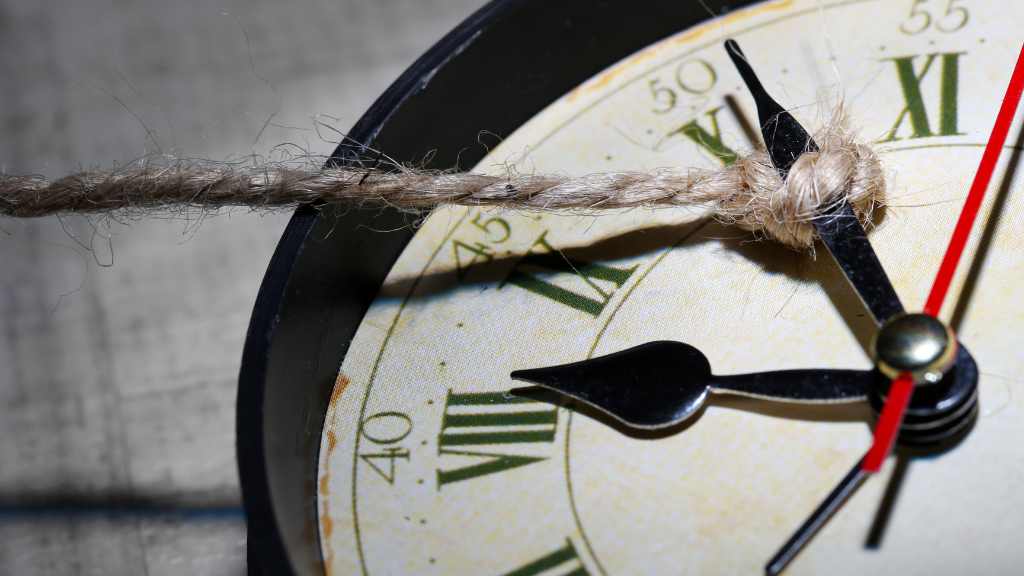
In Stephen Hawking’s A Brief History of Time for instance, the arrow of time is presented as driven by an increase in entropy. In Indian thought, this aligns with Srishti (creation) and Laya (dissolution), reflecting time’s irreversible yet cyclical nature. The arrow of time does move forward, but our mind and consciousness can move in all directions.
This also aligns with our Karma Siddhanta. However, we are given the “Prati Prasav Sadhana” (mentioned in the Yoga Sutras of Patanjali) using which we can go back in time in our psyche and release the psychic impressions we are holding on to, thus burning the seeds of karma and thereby change our perception of the past. As we unload the burdens of the past, we can bring ourselves to live more in the present and consciously create our lives.
Thus, time is not just a ticking clock—it’s a force that shapes, challenges, and teaches us. Therefore, it is worth our time to understand time more deeply.
Time, The Quantum Physics View
The article “Time might be a mirage created by quantum physics, study suggests,” by Ben Turner, published on July 11, 2024, explores the possibility that time is not a fundamental property of the universe but an emergent phenomenon arising from quantum entanglement. Physicists have long grappled with the nature of time, as inconsistencies between quantum mechanics and Einstein’s theory of general relativity hinder the development of a unified “theory of everything.” A new study, published in Physical Review A on May 10, 2024, proposes that time emerges through quantum entanglement, using the Page and Wootters mechanism first introduced in 1983. Alessandro Coppo, the study’s lead author from the National Research Council of Italy, explained to Live Science: “There exists a way to introduce time which is consistent with both classical laws and quantum laws, and is a manifestation of entanglement. The correlation between the clock and the system creates the emergence of time, a fundamental ingredient in our lives.”Despite the promise of this approach, critics like Vlatko Vedral of the University of Oxford caution that the concept is not yet testable. Vedral told Live Science: “Yes, it is mathematically consistent to think of the universal time as the entanglement between quantum fields and quantum states of 3D space. However, no one knows if anything new or fruitful will come out of this picture.”Similarly, Adam Frank from the University of Rochester emphasized the need for experimental grounding, stating: “Maybe there is something about entanglement where it plays a role. Maybe the only way to understand time is not from some God’s-eye perspective, but from the inside, from a perspective of asking what is it about life that manifests such an appearance of the world.”
What’s then is the Purpose of Time?
Why do we need time? Beyond clocks and calendars, time gives us structure, purpose, and a sense of direction. It offers opportunities—sometimes disguised as challenges—to grow and succeed.
Seizing the Moment: The Latin saying “Audentes Fortuna Juvat” (Fortune favors the bold) reminds us that readiness and courage can turn time’s challenges into triumphs.
A Little Humor: The Leaning Tower of Pisa once joked with Big Ben: “If you have the time, I have the inclination!”
Tonight, we are celebrating the coming of the new year 2025. However, we are also celebrating the passing of 2024. So, in a sense we are celebrating the death of 2024. Along with Laya (Pralaya) there also comes creation. As the old is getting destroyed, the universe is giving birth to the new. The eternal cycle of death and birth continues.
Let us conclude with an excerpt from the Vairagya Shatakam of Bhartrhari:
Sanskrit Text:
सा रमा नगरी महान्स नृपतिः सान्तःचको च तद्वारः
तस्य च सा विद्वद्परिषद् ताः श्रद्दान्वीबान्धना।
उद्दूतः स च राजपुत्रनिबहस्ते वन्दिनः ताः कथाः
सर्वं यस्य वशेऽग्यास्त्रुटितपथं कालाय तस्मै नमः॥
English Translation:
That lovely city, that mighty monarch, and that circle of feudatory kings at his side,
that cabinet of shrewd counsellors of his, and those beauties with moon-like faces,
that group of wayward princes, those bards and their songs of praise,
all this fleeted away and became mere memories under its power,
salutations to that, Time!
And, thus, “Kalaya Tasmai Namah!”
We bow down to the all powerful TIME!
A meditation to begin the new year:
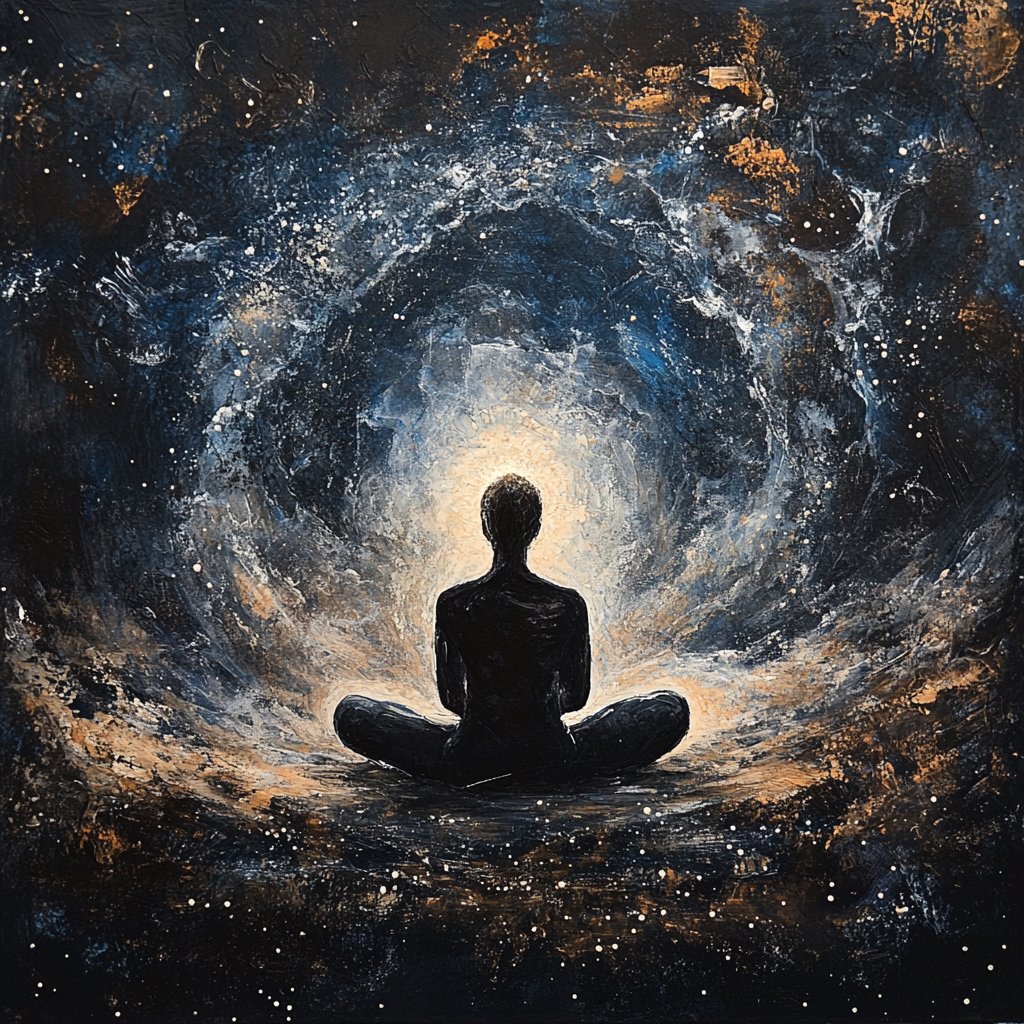
In the cave of my mind, I witness myself sitting and being aware of my own existence. Inbreath is equal to the outbreath. A new rhythm established. One with that rhythm. I am that rhythm. Breath reveals the mysteries of the universe. The experience of breathing. And being aware of the breathing. Being aware of the breath. Body and breath in unison. Mind, Body and breath. Breathing in unison. One with the universe and breathing. Me and the universe breathing together. The universe is experiencing itself breathing. The sun and the moon breathing, the planets and the stars breathing, the mountains, rivers and oceans breathing. All made from the same stuff. My breath in synch with the breath of the universe. The brahmanda breathing. Me, the child of the brahmanda breathing. Me breathing in the womb of the brahmanda and in synch with the brahmanda. One breath, one song. Uni Verse. The song of the universe. Universe breathes in I come alive; Universe breathes out I dissolve. Between the inbreath and the outbreath, I appear and fade away. Between the inbreath and the outbreath, the world appears and disappears. I am that and that is me. I am that which I seek. Ah, the mysteries that unfold so beautifully when you sit with all your being focused on the tip of your nose. The secret of the universe is hiding just beneath your nose. Find it!


Most of what you say is astonishingly accurate and that makes me ponder why I hadn’t looked at this in this light previously. This piece really did switch the light on for me personally as far as this specific topic goes. Nonetheless at this time there is one particular factor I am not really too comfy with and while I attempt to reconcile that with the actual core theme of the point, allow me observe just what the rest of your subscribers have to point out.Nicely done.
ieo7xk
v16po2
1hp60y
8gl6re