
Agraharas: The Sacred Groves of Learning That Helped Shape India’s Civilizational Genius
Where knowledge flowed like sacred rivers and wisdom grew like ancient banyan trees
Picture this: A serene settlement at dawn, where the air vibrates with Vedic chants mingling with philosophical debates. Children trace Sanskrit letters in sand while elderly scholars discuss the intricacies of astronomy under sprawling trees. This isn’t just a romantic vision of ancient India—this was the living reality of Agraharas, sophisticated educational-residential ecosystems that served as the beating heart of India’s intellectual and spiritual heritage for centuries.
The Architecture of Enlightenment
The word ‘Agrahara’ itself tells a story—’agra’ meaning foremost, and ‘hara’ meaning a garland. In a sense (due to the U-shaped construction of these houses), this was the first garland around the temple. These weren’t random clusters of Brahmin houses, but intentionally designed “garlands of learning” that adorned the landscape of ancient India like jewels on a crown. From Talagunda in Karnataka to the banks of sacred rivers across the subcontinent, Agraharas emerged as India’s answer to the great universities of the ancient world—but with a profound difference.
While Alexandria’s library hoarded scrolls and Athens’ academy drew rigid boundaries, Agraharas wove learning into the very fabric of daily life. Here, the Purusharthas—Dharma, Artha, Kama, and Moksha—weren’t abstract concepts taught in isolation but lived realities that pulsed through every moment of community existence.
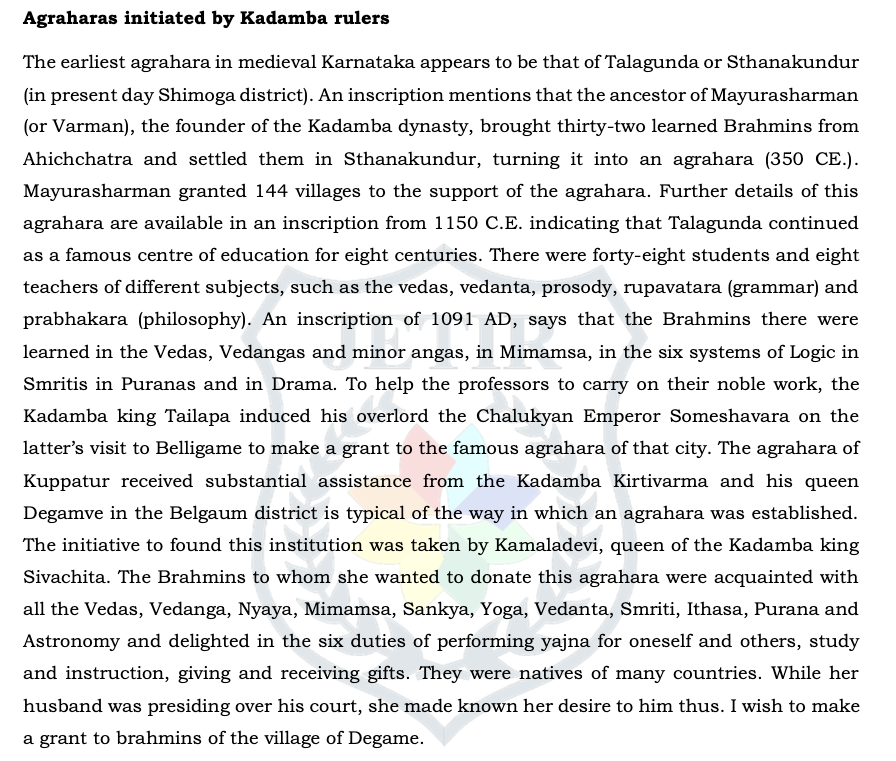
Source: ‘Agraharas of Ancient Karnataka’ by Dr Rekha HG, Assistant Professor of History
Government First Grade College Vijayanagar Bangalore
More Than Just Brahmin Enclaves: The Democratic Spirit of Sacred Learning
The inscriptions tell a different story. Yes, learned Brahmins formed the core, but blacksmiths taught metallurgy, farmers shared agricultural wisdom, and the learned men taught various branches of knowledge to a cross-section of the society.
Consider the Rajaram Agrahara in Mysuru, built in 1935 for a modest rent of two rupees annually. The central park, occupying 26% of the settlement, became a democratic space where children of all backgrounds played while their parents discussed everything from the Upanishads to the price of grain.
The jagali—that distinctive covered verandah—deserves special mention. Neither fully private nor entirely public, it served as a liminal space where social boundaries softened. Here, visiting scholars debated with residents, children received informal lessons, and the community’s collective life unfolded. It was architecture as social philosophy, creating spaces that encouraged interaction while respecting privacy.

Agraharas and the Four Purusharthas
The design and functioning of Agraharas reflected the integration of the four Purusharthas—the aims of human life in Indic thought.
Dharma (Righteous Living) – Residents were custodians of ethical conduct, preserving scriptures, and conducting rituals that aligned the community with cosmic order.
Artha (Wealth) – Economic activities such as land cultivation, temple donations, and artisanal production created sustained wealth for the community.
Kama (Aesthetic and Emotional Fulfilment) – Cultural expressions—music, dance, poetry—flourished around temple festivals.
Moksha (Liberation) – Spiritual education and meditative practices guided individuals towards self-realization.
By embedding all four Purusharthas into daily life, Agraharas became living laboratories for holistic human development (Kulkarni 2020).
The Curriculum of Consciousness
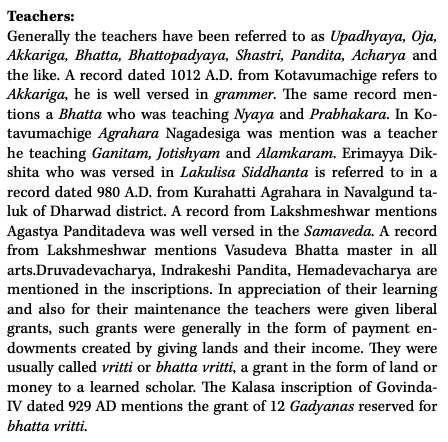
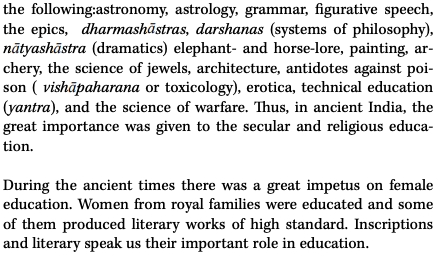
What made Agraharas remarkable wasn’t just what was taught but how knowledge was transmitted. The curriculum reads like a blueprint for creating Renaissance minds centuries before Europe coined the term. Students mastered the Vedas and Vedangas, yes, but also studied:
- Ganita and Jyotisha (Mathematics and Astronomy)—producing scholars who calculated planetary positions with stunning accuracy
- Ayurveda and Vishaapaharana (Medicine and Toxicology)—creating physician-philosophers who saw health as harmony
- Natya and Sangita (Drama and Music)—understanding that art wasn’t entertainment but a pathway to transcendence
- Arthashastra and Dandaniti (Economics and Governance)—because spiritual wisdom without worldly competence was considered incomplete
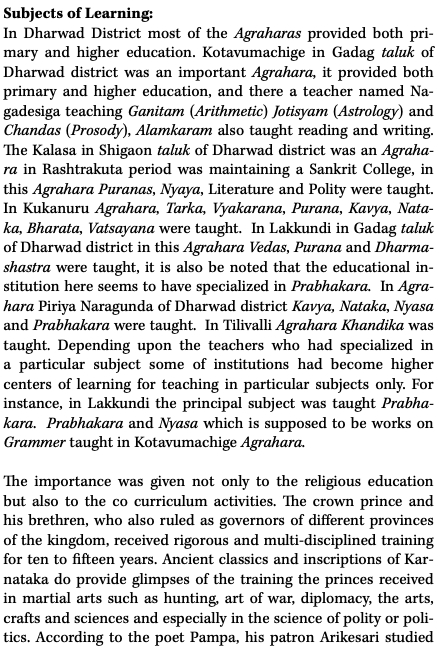
The Kotavumachige Agrahara specialized in Prabhakara philosophy, while Lakkundi became renowned for advanced grammar. This type of specialization created an intellectual network across the subcontinent—a medieval internet of ideas where scholars traveled between Agraharas, cross-pollinating knowledge traditions.
The Temple-Agrahara Symbiosis: Engineering the Sacred Economy
Here’s where Agraharas reveal their genius as civilizational architects. They didn’t exist in isolation but formed intricate relationships with temples, creating what we might call the “dharmic economy.” This wasn’t capitalism or socialism—it was something far more sophisticated.
Temples weren’t just places of worship but:
- Economic engines employing hundreds of artisans, musicians, and administrators
- Cultural universities where dance, music, and literature flourished
- Social security systems providing free meals, healthcare, and dispute resolution
- Technological centers utilizing sacred geometry and acoustic science in their architecture
The land grants (often tax-free) that sustained Agraharas came with conditions—knowledge couldn’t be hoarded but had to flow freely. Produce from Agrahara lands fed not just scholars but funded festivals, fed pilgrims, and supported artists. The surplus was reinvested in community welfare, creating a regenerative economy where wealth and wisdom reinforced each other.
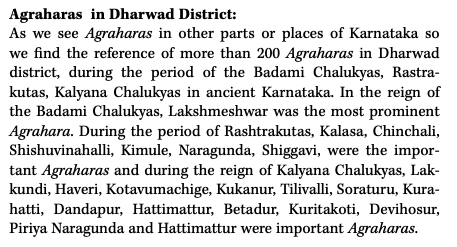
The Ripple Effect: How Agraharas Shaped Civilization
The influence of Agraharas extended far beyond their physical boundaries. They served as:
Preservation Centers: When invasions threatened, Agraharas became arks preserving not just texts but oral traditions, ritual knowledge, and cultural memory. The fact that we can still access 3,000-year-old Vedic chants with perfect pronunciation is testament to their success.
Innovation Hubs: Contrary to stereotypes about static tradition, Agraharas were spaces of intellectual ferment. New commentaries on ancient texts, revolutionary philosophical schools, and scientific discoveries emerged from these settlements. The Kerala school of mathematics, developing calculus centuries before Newton, had its roots in the Agrahara tradition.
Social Laboratories: Agraharas experimented with governance models, economic systems, and social arrangements that influenced larger political structures. The Mahajana system of administration—where 200-400 learned members managed affairs through consensus—provided templates for democratic governance.
Soft Power Projectors: Scholars from Agraharas traveled to Southeast Asian courts, spreading not through conquest but through culture.
Here is an example from Karanataka. Similar examples can be found from other states.
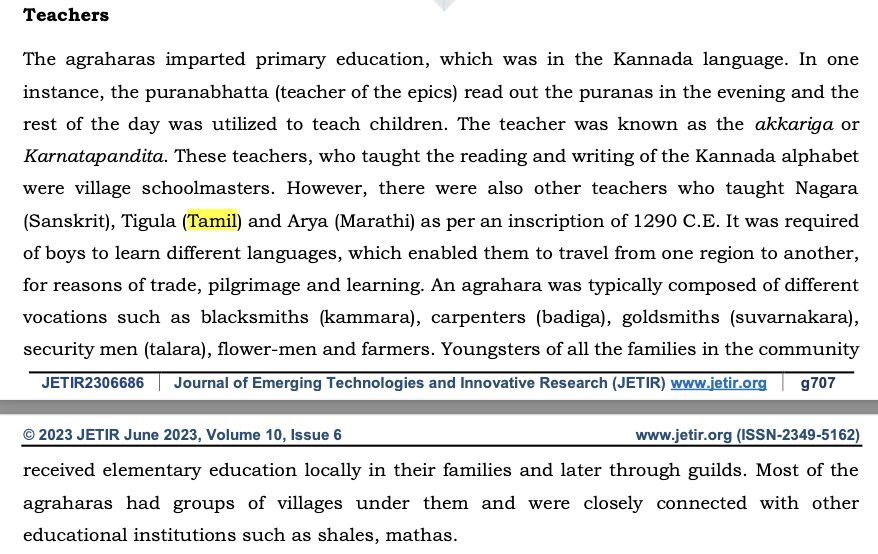
Government First Grade College Vijayanagar Bangalore
The Modern Resonance: Why Agraharas Could Matter Now – Reimagined
In an age of educational industrialization, where knowledge is commodified and wisdom relegated to self-help sections, Agraharas offer profound lessons. If we can understand the principles based on which they were designed, then we can apply these principles to design new learning hubs in alignment with current social realities but delivering similar results and possibilities.
Integration Over Fragmentation: While modern education creates specialists who know more and more about less and less, Agraharas produced polymaths who saw connections between astronomy and poetry, mathematics and music, governance and philosophy.
Community-Embedded Learning: Unlike isolated campuses, Agraharas embedded education in community life. Learning happened not in artificial environments but amidst the complexities of real existence.
Sustainable Knowledge Systems: The economic model of Agraharas—where knowledge creation was supported by productive land grants rather than debt-creating fees—offers alternatives to current educational financing.
Technology with Purpose: Agraharas mastered technologies—from metallurgy to architecture—but always in service of higher purposes. They remind us that innovation without wisdom is merely clever destruction.
We could imagine “Villages within Cities” – learning villages with living cultures where the whole village joins hands in bringing up children and passing on civilizational knowledge. Of course these villages can come in many different versions and themes to accomodate the inherent diversity of our country.
Reimagining the Future Through Ancient Wisdom
As India reclaims its civilizational narrative, Agraharas aren’t relics to be museumified but blueprints to be reimagined. Modern experiments are already underway—eco-villages incorporating Agrahara principles, educational communities blending traditional and contemporary knowledge, technology campuses designed around sacred geometry.
Imagine neighborhoods where:
- Retired professionals teach children in community spaces
- Gardens produce food while serving as botany classrooms
- Festivals become laboratories for cultural transmission
- Technology serves tradition rather than replacing it
- Economic activity aligns with ecological and spiritual principles
This isn’t nostalgic romanticism but pragmatic futurism. In a world fracturing under the weight of hyper-specialization, social isolation, and ecological crisis, Agraharas offer a tested model for creating integrated, sustainable, wisdom-centered communities. Afterall what makes a civilization and what keeps it alive is its knowledge and how this knowledge is lived and passed on from generation to generation; what we learn, how we learn and how teach. Indian Knowledge Systems will really fuel India’s growth when it becomes lived culture as opposed to ideas discussed only in books.
The Eternal Relevance
The Agraharas of ancient India weren’t perfect—no human institution is. They had their limitations, their exclusions, their failures. But at their best, they represented something magnificent: the belief that knowledge is sacred, that learning is lifelong, that wisdom must be lived not just studied, and that education’s ultimate purpose isn’t producing workers but awakening consciousness.
Today, as humanity stands at a crossroads between wisdom and cleverness, tradition and disruption, community and isolation, the Agrahara model whispers an ancient secret: True education doesn’t just inform minds—it transforms souls, builds communities, and sustains civilizations.
The banyan trees that shaded ancient Agraharas are mostly gone, the Sanskrit chants have grown faint, and the jagalis have crumbled. But the idea they embodied—that learning, living, and liberation are not separate pursuits but one sacred journey—remains as relevant as tomorrow’s sunrise.
Perhaps it’s time to plant new groves of learning, where ancient wisdom meets modern knowledge, where technology serves transcendence, and where education once again becomes what it was always meant to be: the art of becoming fully human.
A visit to the Sanskrit speaking village of Karnataka might be worth it.
In rediscovering Agraharas, we don’t just reclaim our past—we reimagine our future. Share your thoughts!