
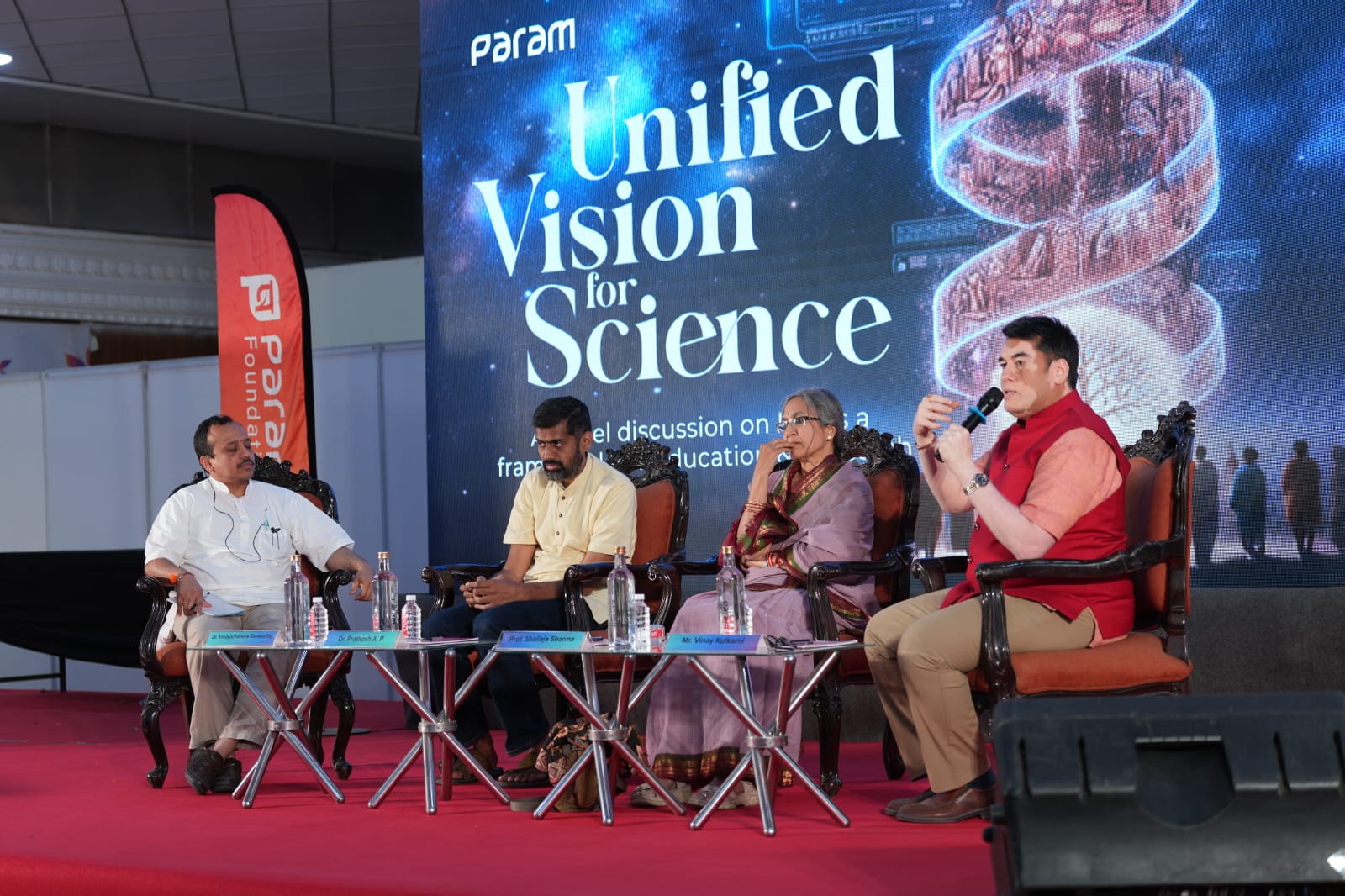
Exploring IKS as a framework for education & research
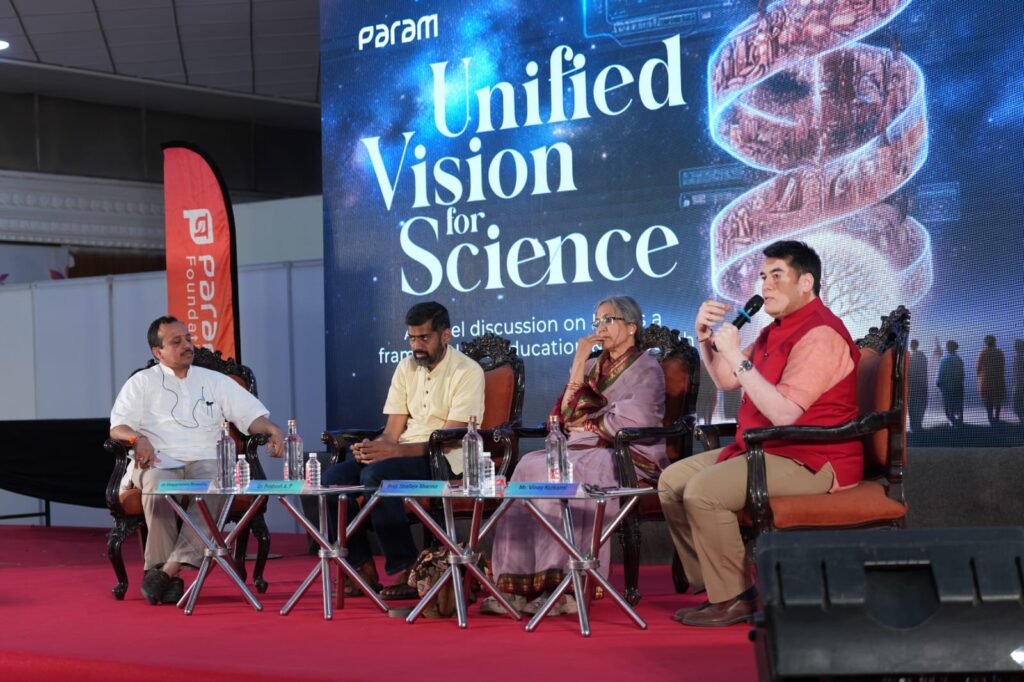
Based on a panel discussion organized by Param – Unified Vision for Science and Vedanta Bharati, Bengaluru
Moderated by Dr. Vinayachandra Banavathy, Chanakya University
An insightful dialogue on honouring the past and innovating for the future–exploring how Indian Knowledge Systems can shape modern education, research, and innovation.
Prof. Shailaja Sharma, Azim Premji University
Shri Vinay Kulkarni, Founder, ALCHMI
Dr. Prathosh A P, Asst. Professor, IISc
31st Jan | 5 to 6:30pm
Tripura Vasini Palace Grounds, Bengaluru
Click here for Article Based on the FULL Panel Discussion
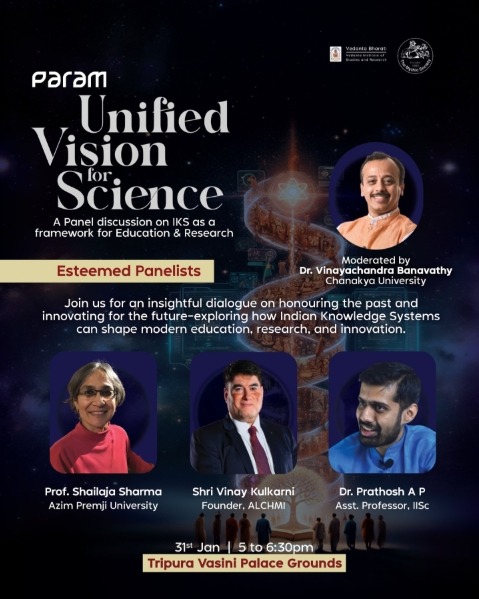
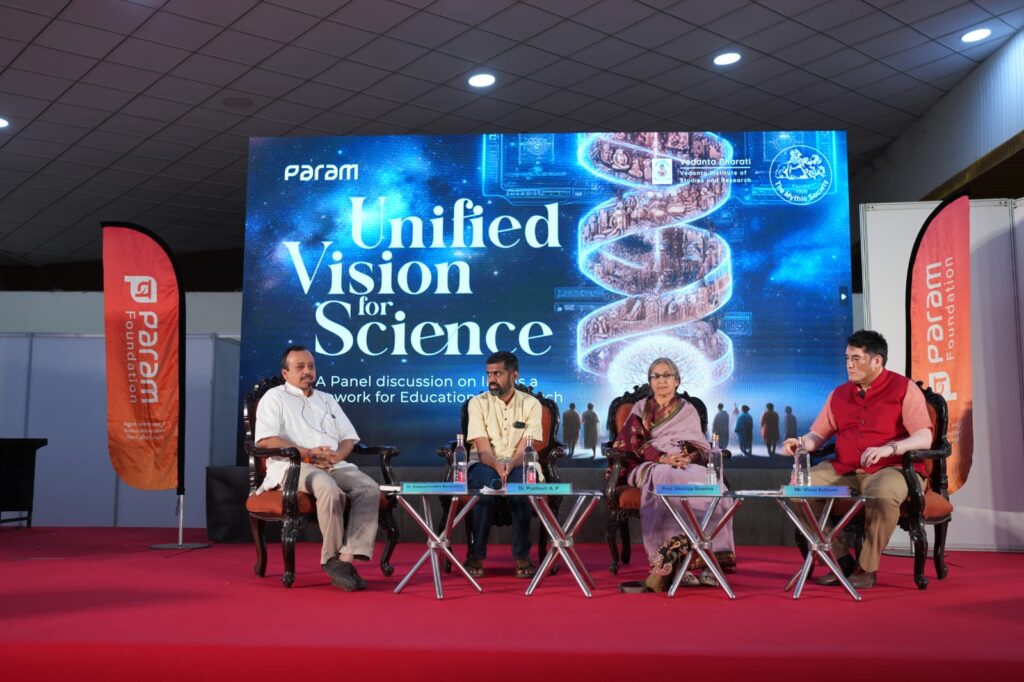
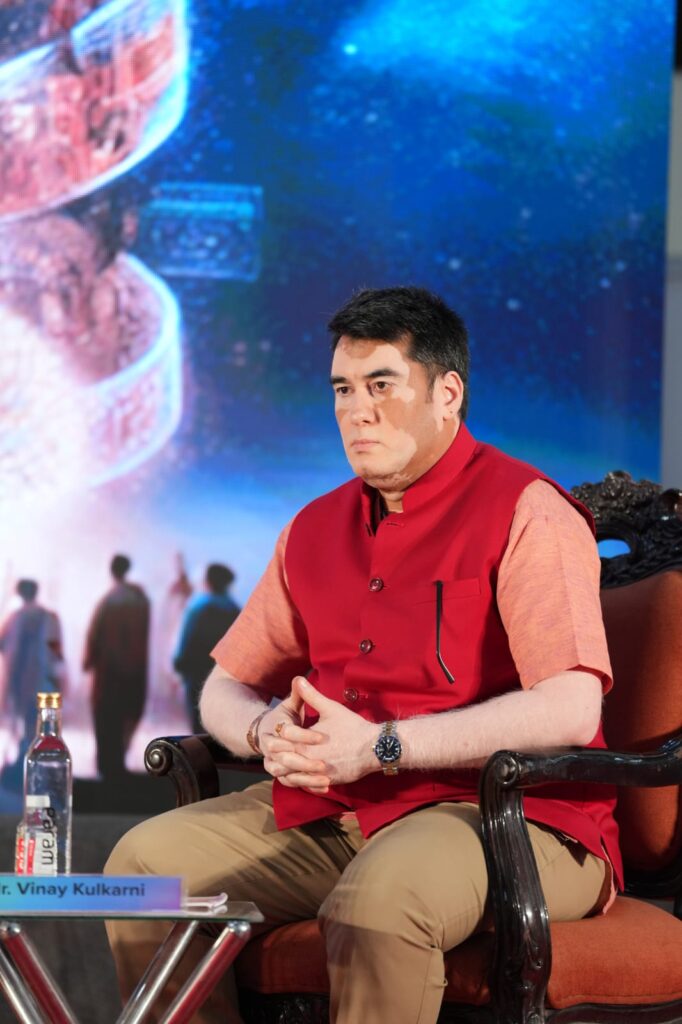
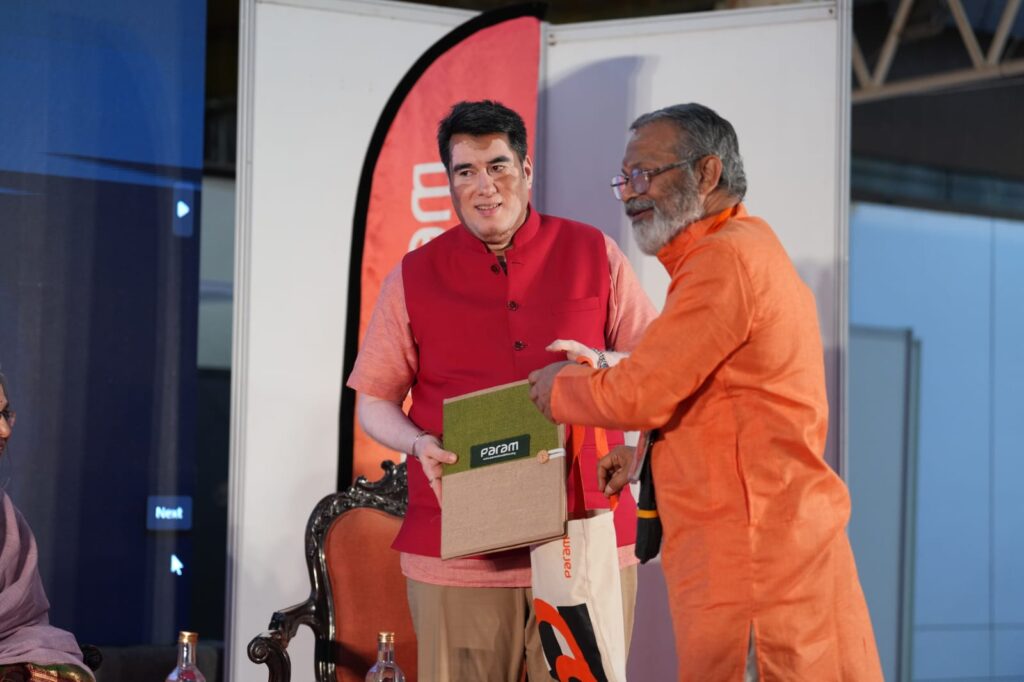
I am sharing here a summary article based on my responses to questions asked during the above panel discussion by our moderator Dr. Vinayachandra Ji and the audience. Overall it was a wonderful panel discussion and I enjoyed engaging with the questions, the audience and my fellow panelists Dr. Shailaja and Dr. Pratosh. I thank Param and Vedanta Bharati for the opportunity. I have not included the responses of the other panelists to avoid misrepresenting their statements.
From Wonder to Wisdom: What We Actually Mean by Indian Knowledge Systems
When people say “Indian Knowledge Systems,” I smile a little inside.
Not because the term is wrong. But because the words knowledge and system carry a certain weight in English that doesn’t quite capture what we’re pointing to.
In many modern contexts, “knowledge” implies something we use to manipulate the world—to gain advantage, to extract, to control. And “system” sounds like a machine built for regulation. Put them together, and you risk making something living sound bureaucratic.
A Continuous Chain, Not a Museum Piece
What our ancestors did—and what we are part of as a continuous chain of people this land has produced—was simply this: they arrived into a world already in motion, and they paid attention.
Imagine waking up in a place where everything is already happening. Beautiful mountains. Rivers that move with purpose. Forests that breathe. And then you discover something called hunger.
But hunger doesn’t arrive randomly. It arrives cyclically—at particular times. You eat, and it goes away. Then it returns.
So you observe: there is repetition.
Then you notice it gets bright, and then dark. The sun rises, the moon appears. Again—a cycle. The seasons turn, the rivers flood and recede. Again—pattern. Order.
A mind that is truly awake starts to see that things are not happening in chaos. There is cyclicity. There is rhythm. There is something that could only be called design.
And then the questions arise—not as intellectual exercises, but as genuine encounters with reality:
Who created this? How did this begin? Has it always been going on? Is something thinking about me?
That last question is worth sitting with.
Because when our ancestors noticed that they experienced hunger—and that creation had already provided something to satisfy it; that they needed shelter—and that the materials to build it existed; it began to feel less like accident and more like intention.
As if something in the universe was actually oriented toward their welfare.
The most important response our ancestors had to what they encountered was not arrogance. It was not conquest. It was not the urge to control.
It was wonder.
“What an astonishing and beautiful thing this is.”
That sense of wonder—that vismaya—is where every genuine inquiry begins. And from that place of wonder, many different schools of thought emerged. Because when human beings face the same profound questions, they don’t always arrive at the same answers.
Some said: yes, creation happened through an intelligent cause. Others said: it unfolds on its own. Some focused on careful observation. Some developed methodologies of inquiry. Some did what we would today call experimentation. Over centuries and millennia, a certain understanding took shape.
Rishis Didn’t Demand Belief—They Offered a Path
At a deeper level of consciousness, what we call rishis perceived creation in ways that went far beyond ordinary observation. They perceived the whole—cause and effect, how things arise, how they unfold—almost as an integrated living reality.
But here is what matters most.
They didn’t say: “This is what I saw. Now believe me.”
They said something far more radical—and far more mature:
“There is a path. If you walk it, you may come to see what I saw. You may experience what I experienced. You don’t have to trust me. Verify it yourself.”
That is a foundational principle of what we call IKS today. It is not a collection of claims to be accepted on faith. It is a civilization that built methods of arriving at truth—across every domain of life.
And the knowledge that came from those methods was captured with great care: in sutras, in shastras, in oral traditions of astonishing precision. A body of knowledge emerged. But behind it was not intellectual ambition alone. It came from compassion—the recognition that other people in society should also be able to access these insights and live from them. Not through belief. Through realization.
No False Divide Between This World and That
One confusion that keeps surfacing is the idea that we were somehow divided between the material world and the spiritual. That we had to choose between prosperity and liberation.
For us, this was never a contradiction.
Think about what you wish for the people you love. You wish them material prosperity. And you also wish them ultimate welfare—peace, fulfilment, freedom. Both. Simultaneously.
You cannot have the wheat without the husk. You cannot have only the husk. Spiritual evolution and material prosperity come together, like grain and its covering. That is why our knowledge systems covered the full spectrum of life.
We had frameworks for dharma—right conduct, social order, the ethical fabric of life.
We had deep thinking on artha—economics, governance, the art of building flourishing societies.
We had paths oriented toward moksha—the ultimate questions of existence and liberation.
And we had multiple darshanas—schools of inquiry, each valid, each illuminating a different face of the same truth.
When someone says “Indian Knowledge Systems,” what they are pointing to—at the most fundamental level—is this body of knowledge. Born from wonder. Refined through observation. Deepened through consciousness. And shared with compassion.
The Lens You Use Determines What You See
One of the greatest challenges today is not lack of information. It is the lens through which we approach it.
Before we evaluate anything—before we ask whether something is valid or superstitious or scientific—we must examine the mental models through which we are seeing. Because those models completely determine the answers we will find.
We first have to cleanse our lenses of the colonial imprint that was installed in the mind.
Here is a simple example. I was doing a course recently, and someone said: “I’m amazed we had such a vast knowledge system… but why are people so superstitious?”
I stopped and said: before you ask that question, write it down and examine it.
What do you mean by “superstitious”? How did you arrive at that definition? What makes something superstitious to you? And what makes something else not superstitious?
Where did this question come from? Was it yours? Or was it planted in you?
This is difficult work. But it is necessary work. Because the most dangerous questions are the ones we never think to question at all.
Take epistemology—what counts as valid knowledge, and what methods of inquiry are admissible. Many modern Western approaches tend to stop at what the Panchakosha framework calls the Annamaya level—the domain of the physical and the sensory. Our inquiry goes further. We understood that there are ways of knowing that go beyond the senses.
And that is where much of the conflict arises.
But then we should ask a simple question: is yoga not science? That depends entirely on what you define as science, what methodologies you consider legitimate, and what you accept as valid evidence. Define the terms, and the argument often dissolves.
IKS in Education Is Not About Swapping Content
When it comes to integrating IKS into education, I feel very strongly about this: it is not as simple as replacing “Western content” with “Indian content.”
IKS is not primarily about content.
It is about pedagogy. It is about the person standing in front of you.
Look at the Bhagavad Gita. Krishna could have told Arjuna: “Just stop asking questions and fight.” But he didn’t. He took eighteen chapters. He answered in so many different ways, through so many different frameworks. He never grew impatient with Arjuna’s persistence.
Why? Because he genuinely wanted Arjuna to understand. He was truly invested in the progress of that person.
That intention—it is my dharma to enable the flowering of this individual in every possible way—is the starting point of IKS in education.
Start With the Child in Front of You
Let me give you an example from my own experience.
I was working with a group of children. The topic was supposed to be Indian culture. But the children were completely restless—this was just after COVID. Some couldn’t sit still. Some were practically rolling on the floor.
And they were aware of it themselves. They said to me: “I can’t control my mind. Help me.”
In that moment, I said to myself: forget the curriculum. The objective is not the curriculum. The problem is right here in front of me.
So I reframed the session entirely.
I said: “Your mind is a pet. Let’s figure out how to train it.”
They named the pet. They drew the pet. They described how the pet behaves—unruly, unpredictable, refuses to listen.
Then I asked: “What do you want your pet to do?”
They made a list.
Then: “Now speak to your pet. Tell it what you want.”
To do that, they had to close their eyes and turn inward. They were meditating—but I never used the word “meditation.” By the end, the stillness in the room was palpable.
That is pedagogy. Activating the learner. Being genuinely interested in whether this person is actually growing.
Teach Children to Ask Real Questions
Another practice I use is asking children to bring a question—not an answer. A question that truly matters to them. Something their parents, their teachers, nobody has been able to answer, but it sits with them.
At first, a six-year-old might ask: “Is the sun yellow or orange?”
I ask: is that important to you? What would you do with that answer?
And then they reach deeper.
An eleven-year-old girl once asked me: “Have we stopped evolving as human beings? Can we evolve beyond this?” That is Sri Aurobindo-level inquiry.
My five-year-old niece asked: “Why do we sleep?” That is a Stanford PhD-level question.
The capacity is there. It just needs to be drawn out, not suppressed.
Language, Culture, Consciousness
I am not a fan of translations – really good translations are few and far between.
Language is not merely a tool for communication. Language shapes cognition. Language carries culture. Language carries a worldview embedded so deep that you cannot separate the words from the way of seeing. It carries mental models. Language itself is a mental model in fact, if you think about it.
IKS: A Living Continuum – letting the river of knowledge flow again unabated
So when we speak of Indian Knowledge Systems, we are not speaking of a dead archive.
We are speaking of a living continuum—a civilization that responded to existence with wonder, built methods of inquiry, captured insight with rigor, and shared it with compassion. Not so that the next person would believe truth, but so they would have a way to arrive at it themselves.
If we are serious about bringing IKS into education, into our institutions, into our lives, we must begin not by swapping textbooks but by restoring something deeper: the intention, the pedagogy, the language, and above all, the frameworks through which we define knowledge itself. In fact take a look at all our current ideas, assumptions, frameworks, structures and models related to education really look at it with a clear eye and cleanse them all of the persistent and troublesome colonial lens and baggage and look at it all afresh with the Bharatiya Shatric Dristi and redefine what education means and how it is to be engaged with, offered and developed in the interest of national sovereingty, the welfare of present and future generations and the revival of Bharatiya Civilizational flow.
That restoration is not a backward glance. It is how we move forward—rooted.


Wonderful reading this! Thanks for sharing these thoughts
property for sale in jumeirah park Buy Penthouse in Dubai